

The 1920s were a decade of both optimism and upheaval in American life. In the aftermath of World War I, economic growth and cultural change accelerated, while traditional values were increasingly challenged. The rise of modernism and secular thought, brought into sharp national focus during the Scopes Trial of 1925, led many to question the authority of Scripture. At the time, reports suggested that nearly half of college students were drifting from their faith, often influenced by mentors such as their professors.
In this climate of spiritual uncertainty, evangelist Bob Jones Sr. became deeply burdened for the future of Christian young people. In late 1925, he resolved to establish a nondenominational Christian college that would unite orthodox believers around the fundamentals of Scripture while providing a strong academic education. Officially chartered by the 14th Circuit Court of Florida on April 14, 1926, the new institution began as an expression of both conviction and urgency.

Despite financial hardship and cultural resistance, the vision moved forward. Jones pursued an innovative fundraising approach by offering bonds rather than soliciting direct donations, allowing supporters to invest in the school’s future. On December 1, 1926, a groundbreaking ceremony at College Point near Lynn Haven, Florida, marked a significant milestone, attended by early supporters and civic leaders. Encouraged by prominent Christian figures such as Billy & Nell Sunday and Dr. Harry Ironside, the college gained momentum even as resources remained limited.
Bob Jones College officially opened on September 14, 1927, as a junior college with an associated academy. As noted in Standing Without Apology by Dan Turner, the inaugural student body likely included 85 college students and 47 academy students, studying in programs such as Bible, music, and speech. In addition to the Charter, Bob Jones, Sr. attempted to define the institution’s purpose and core identity in those opening years. Responding to parents who mistakenly concluded BJC was a reform school, Jones clarified the institution was not intended to reform those indifferent to truth, but to educate and spiritually develop young men and women committed to knowing and serving God. BJC’s identity was further confirmed with its first tagline: “Interdenominational. Orthodox. Educationally Strong. Spiritually Safe.”

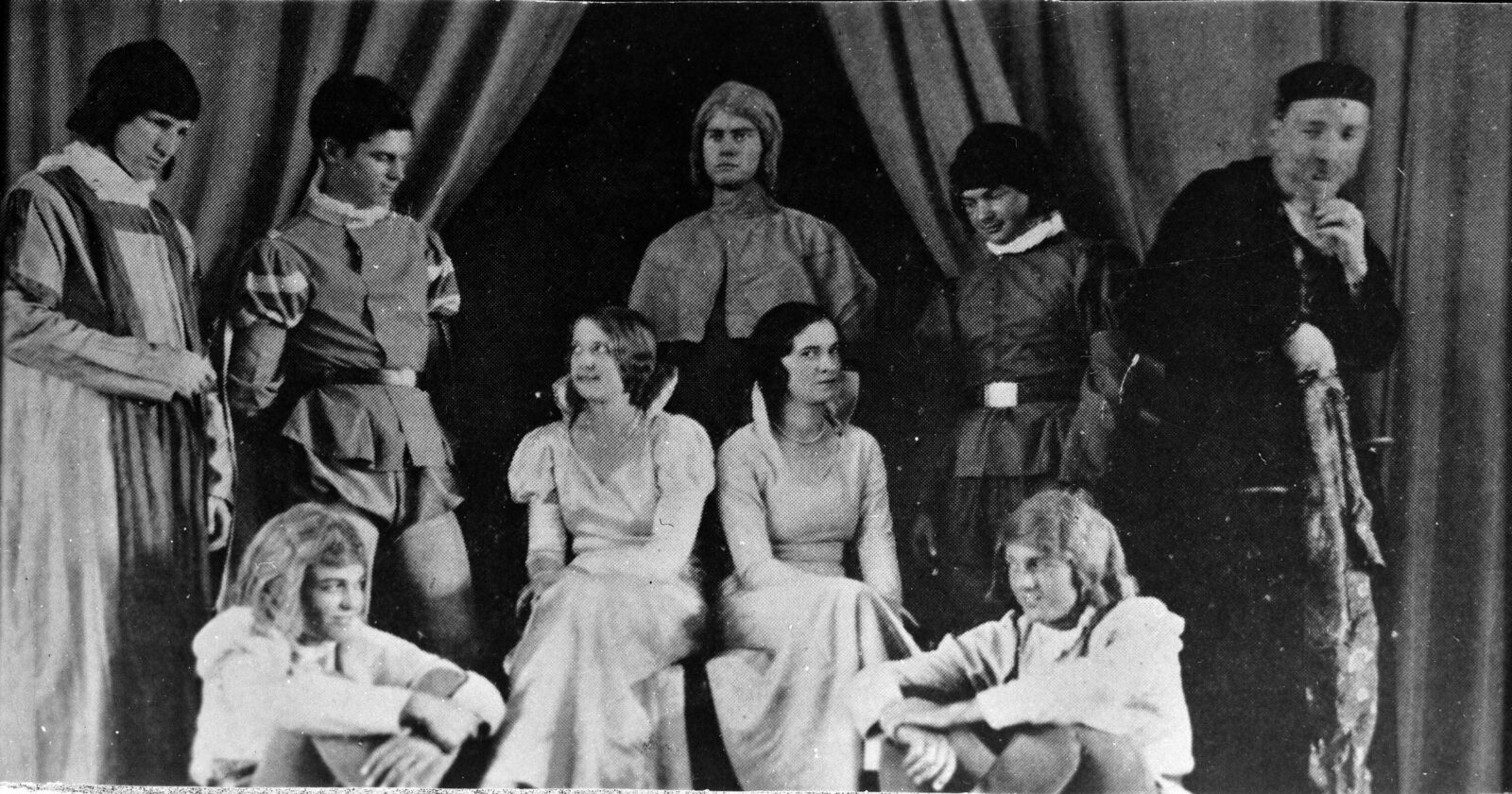
From its earliest days, the college blended discipleship and academic rigor with a vibrant campus life. Bob Jones Sr. established regular chapels the whole campus was expected to attend while faculty helped sustain a culture marked by both excellence and conviction. Additional activities quickly became part of campus life, including Twilight Musicale (later Vespers), student ministry, a strong emphasis on the arts through organizations like the Classic Players and music groups such as the College Choral Club which toured extensively. Athletics also became part of campus life, with teams earning the nickname “Swamp Angels.”
The college continued to grow and mature quickly. It held its first commencement on June 5, 1928, and by 1929 expanded to a four-year baccalaureate program. Even in these early years, the institution demonstrated its commitment to doctrinal conviction, addressing theological challenges that arose among faculty.


The 1930s began under the shadow of the Great Depression, testing the young institution in ways few could have imagined. As economic hardship swept the nation, students often paid tuition with labor, crops, or other useful goods. Faculty accepted reduced compensation so the school could continue, and students even organized efforts to help classmates remain enrolled. Through these challenges, a strong sense of shared purpose emerged, rooted in the conviction of founder Bob Jones Sr. that the college was worth preserving.
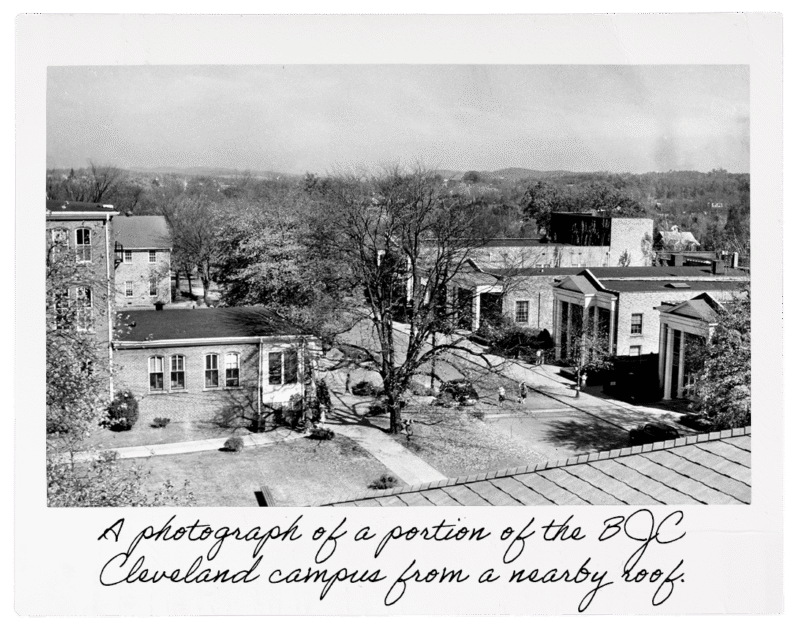
That conviction was put to the ultimate test in 1933. After financial pressures led to foreclosure on the Florida campus, Bob Jones College was forced to leave its home. What could have been the end of the institution instead became a new beginning when Cleveland, Tennessee, offered the former campus of Centenary College. With no available cash for the move, donor Grace Haight and another supporter each contributed $3,000—nearly $75,000 in today’s value—making the relocation possible. Thanks to this timely generosity, the college continued classes without missing a day as it established a new home in Tennessee.
The move marked the start of a decade of transformation. Bob Jones Jr., serving as acting president, helped expand the school’s commitment to the arts, establishing Shakespearean productions, developing musical programs, and inaugurating grand opera. At the same time, academic standards continued to rise. Eunice Hutto, one of the first female deans of a coeducational college in America, championed academic excellence and helped cultivate a growing faculty that increasingly included Bob Jones College alumni. Faculty members were encouraged to pursue advanced degrees, reflecting the institution’s commitment to rigorous scholarship grounded in Christian conviction.

The college’s culture also continued to take shape. In 1933, intercollegiate athletics were discontinued in favor of intramural sports as Bob Jones Sr. sought to keep the institution focused on its spiritual and educational mission. Beyond the campus, he established Gospel Fellowship Association ministries that extended the school’s influence through Bible studies, youth programs, and evangelistic outreach.
Despite beginning the decade in bankruptcy, the college experienced remarkable growth during its years in Cleveland. Under business manager R. K. Johnson, an ambitious building program expanded the campus, aided by the support of entrepreneur and benefactor J. Sephus Mack. Enrollment increased steadily, new academic programs were added, publications such as The Vintage were launched, and the college’s artistic reputation flourished.


The 1940s were defined by both global conflict and remarkable growth. As World War II spread across Europe and Asia and later drew the United States into the fight after the attack on Pearl Harbor, the Bob Jones College community felt its impact deeply. More than 250 former, current, and prospective students entered military service, and some gave their lives in the war. Yet even during years marked by rationing, uncertainty, and government restrictions on construction, the college continued to move forward.
Throughout the decade, Bob Jones College expanded its academic, spiritual, and cultural influence. In 1942, the first issue of the alumni newsletter, Little Moby’s Post, was published, strengthening ties with a growing network of graduates. That same year, Charles Gounod’s Faust became the Opera Association’s first production, reflecting the institution’s growing commitment to the arts. The 1942 Commencement honored influential Christian leaders including evangelist and Bible teacher Harry Ironside and Homer Rodeheaver, the renowned song leader for Billy Sunday. Rodeheaver’s influence on gospel and hymn music was felt across the nation, and many of the songs he wrote, arranged, or popularized remain familiar in churches today. The decade also saw the arrival of Charles Brokenshire, a gifted linguist and religion professor who would later serve as dean of the School of Religion.

Student life was shaped by a strong spiritual emphasis, including dormitory prayer groups and prayer captains. The college hymn, with lyrics by Bob Jones Jr. and music by Harriette Parker, was first sung at Commencement in 1943 and became a lasting expression of the school’s identity. Academic programs continued to expand, graduate study advanced, and the institution’s reputation for combining Christian conviction with serious scholarship continued to grow.
The end of World War II brought dramatic change. Veterans returning home sought education through the G.I. Bill, and enrollment surged. Many of these students felt called to gospel ministry, swelling the ranks of “Dr. Bob’s preacher boys” from just six students in 1927 to nearly 600 by 1946. To house the growing student body, the college purchased neighboring homes and established “Silver City,” a collection of trailers that provided much-needed living space. Enrollment climbed beyond 1,000 students, making Bob Jones College the largest private college in Tennessee. Even after acquiring every available neighboring property, the campus could no longer meet demand, and hundreds of prospective students had to be turned away.

Faced with a choice between limiting enrollment or finding a new home, the college chose to grow. In 1946, after receiving invitations from communities across the country, leaders selected Greenville, South Carolina, as the site of a new campus. The decision set in motion one of the most ambitious undertakings in the school’s history. Ground was broken in September 1946, and through the generosity of thousands of donors, a new campus featuring ten major buildings rose in just eighteen months.
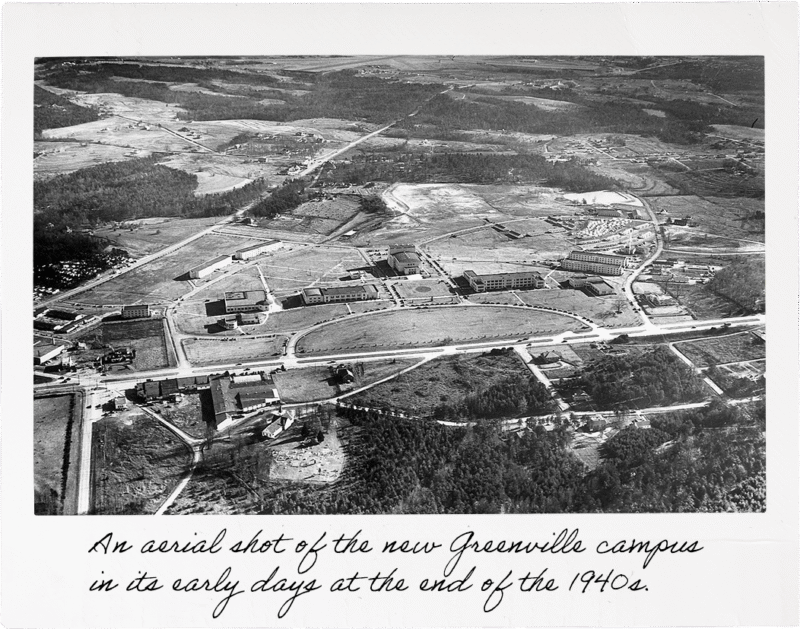
During this period, new aspects of the institution’s identity began to take shape. In March 1946, the school adopted the slogan “World’s Most Unusual University,” highlighting its distinctive blend of Christian conviction, academic rigor, and commitment to the arts. Then on May 28, 1947, Bob Jones College officially became Bob Jones University, and Bob Jones Jr. was named president. By the fall of 1947, the Greenville campus opened with nearly 2,500 students and 79 faculty members. Just fourteen years after bankruptcy and the loss of its Florida campus, the institution had achieved what many considered impossible.

The 1950s were a decade of growth and increasing influence for Bob Jones University. With a new campus in Greenville, a new president in Bob Jones Jr., and a rapidly growing student body, the University entered a season of expansion that touched nearly every area of campus life. While Cold War tensions shaped the broader culture, BJU focused on its mission of providing a Christ-centered education.
As enrollment grew, the campus expanded alongside it. New residence halls, Brokenshire and Creel, provided housing for a growing student body, while the Fine Arts Building opened in 1956 and the University Gymnasium opened in 1959, further enhancing student life and campus facilities.

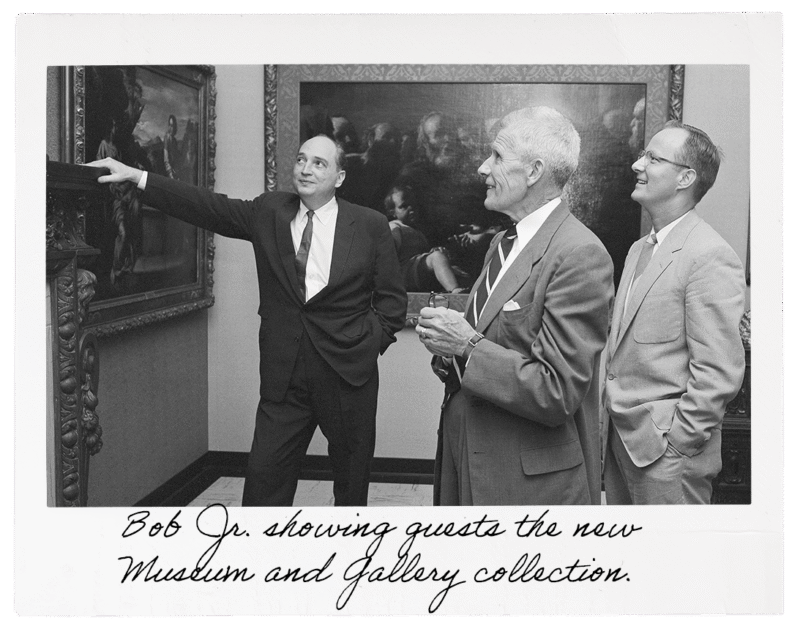
At the same time, BJU’s influence in the arts reached new heights. In 1950, BJU founded Unusual Films, a production studio dedicated to communicating gospel truth through motion pictures. Under the leadership of Katherine Corne Stenholm, the studio quickly matured, producing both short films and feature-length productions, including Wine of Morning in 1955. On Thanksgiving Day 1951, Bob Jones Jr. opened the Bob Jones University Collection of Sacred Art with an initial collection of 25 paintings. What began as a modest gallery grew into one of the world’s most significant collections of religious art. Additionally, the University’s commitment to the arts expanded through its dramatic and musical productions, which drew attention from local and national audiences. Rodeheaver Auditorium became a centerpiece of campus life and the installation of a professional stage obtained from New York City reflected BJU’s pursuit of artistic excellence. Under the leadership of Dwight Gustafson, who became dean of the School of Fine Arts in 1954, the University’s reputation in music, drama, and performance continued to grow.

BJU’s continued commitment to gospel work was also evident throughout this decade. In 1951, Gilbert Stenholm became dean of the School of Religion and helped prepare hundreds of graduates for ministry around the globe. The University strengthened its focus on missions by dedicating half of all Sunday offerings to missionary projects, and in 1957 the Institute of Christian Service was established, broadening opportunities for ministry training.

While there was much advancement during this season, the decade was not without challenges. In 1953, a leadership dispute resulted in the resignation of several administrators and approximately fifty faculty members. Combined with growing tensions between evangelical and fundamentalist movements within conservative Christianity, the controversy led to a temporary decline in enrollment. Yet the institution recovered quickly. By 1955, BJU employed more than 100 faculty members and continued to attract students who embraced its distinctive mission.

The 1960s were a decade of transition for both the nation and Bob Jones University. As America grappled with political assassinations, cultural upheaval, and the rise of the counterculture movement, long-standing assumptions about morality, authority, and faith were increasingly challenged. Amid these changes, BJU remained committed to what its leaders often called “the old-time religion and the absolute authority of the Bible.” That commitment resonated with many Christian families, and the University continued to grow in both enrollment and influence, becoming widely recognized as a leader in Christian higher education.
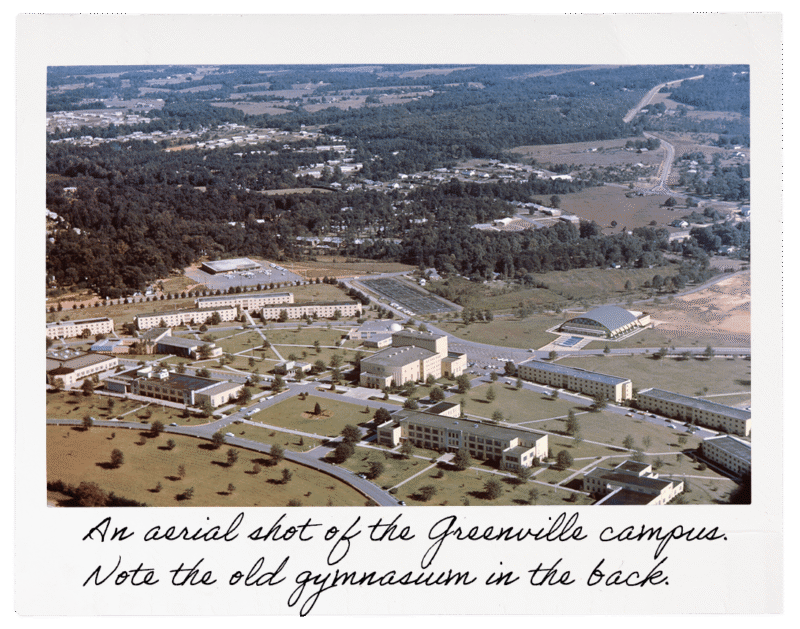
While the culture around it was changing rapidly, the University entered a season of significant campus development. The Howell Memorial Science Building was completed in 1960, bringing expanded science facilities and a planetarium to campus. New residence halls, including Estelle Siddons and Ernest Reveal, accommodated a growing student body, while additional projects—including a new Dining Common, Alumni Stadium, Campus View Apartments, and Barge Memorial hospital—helped shape the campus that students know today.

The decade also reflected BJU’s continuing commitment to academics, the arts, and expanding the University’s reach throughout the country. Unusual Films completed productions such as Red Runs the River in 1963, while the University continued to build its growing collection of religious art, including some of Benjamin West’s The Progress of Revealed Religion. The former Dining Common was transformed into an expanded Museum and Gallery complex, and the University’s radio ministry broadened through the purchase of WAVO in the Atlanta area and the launch of campus station WBJU.

At the heart of the institution remained its commitment to gospel ministry. Ministerial enrollment reached record levels during the decade, and in 1966 the University launched Project Compassion, sending students to St. Lucia on what became BJU’s first official summer mission team led by Dr. John Dreisbach.
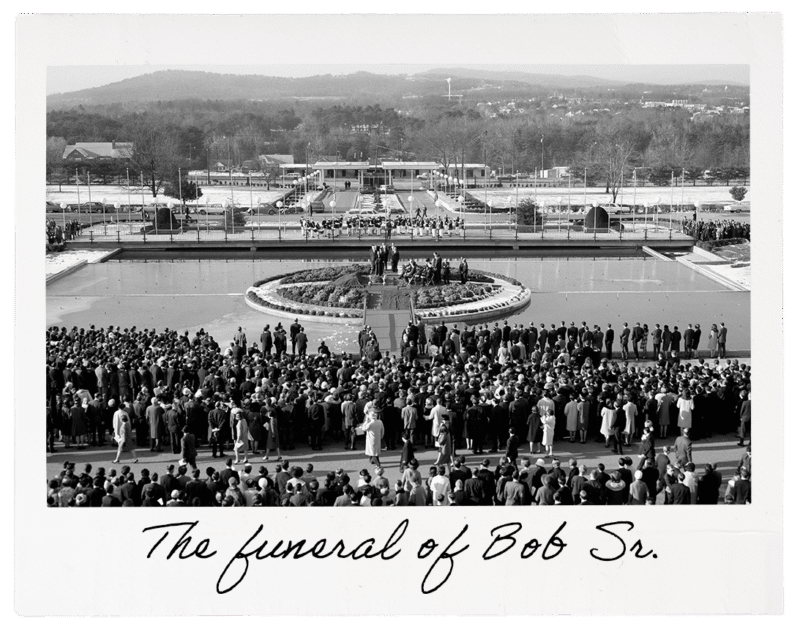
The decade was also marked by an important leadership transition. As Bob Jones Sr.’s health gradually declined, he stepped back from active leadership, retiring as board chairman in 1964 and later from the Board of Trustees altogether. In 1964, Bob Jones III was named vice president, signaling the emergence of a third generation of leadership. When Bob Jones Sr. passed away on January 16, 1968, he left behind far more than a school—he left an educational ministry that had taken root and matured. Friends and alumni recognized that the institution he founded no longer depended on his daily presence to carry forward its mission.

The 1970s were a decade of both challenge and opportunity for Bob Jones University. As America wrestled with cultural upheaval, economic uncertainty, the aftermath of the Vietnam War, and shifting views on morality and faith, BJU sought to remain anchored to its founding convictions. While many institutions adapted to changing cultural trends, the University continued to emphasize biblical authority, Christian character, and a distinctly Christian worldview. For many churches, schools, and families, BJU became a place of stability during a period of rapid change.
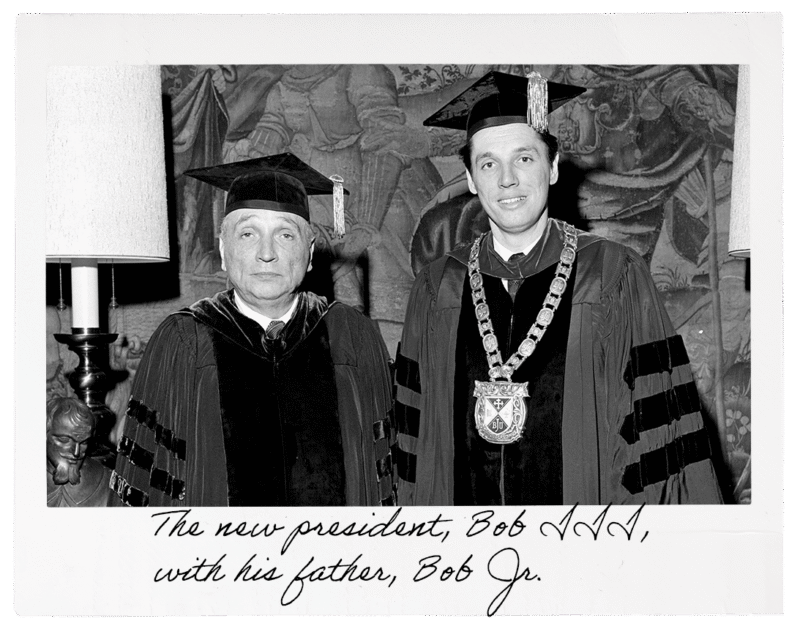
As the University entered its second half-century, a new generation of leadership helped guide its direction. Bob Jones III became president in 1971, while Bob Jones Jr. assumed the role of chancellor. In 1977, Bob Wood joined the administration as executive vice president, beginning a decades-long partnership with Bob Jones III that profoundly influenced the University, helping lay foundations that continue to shape BJU today.
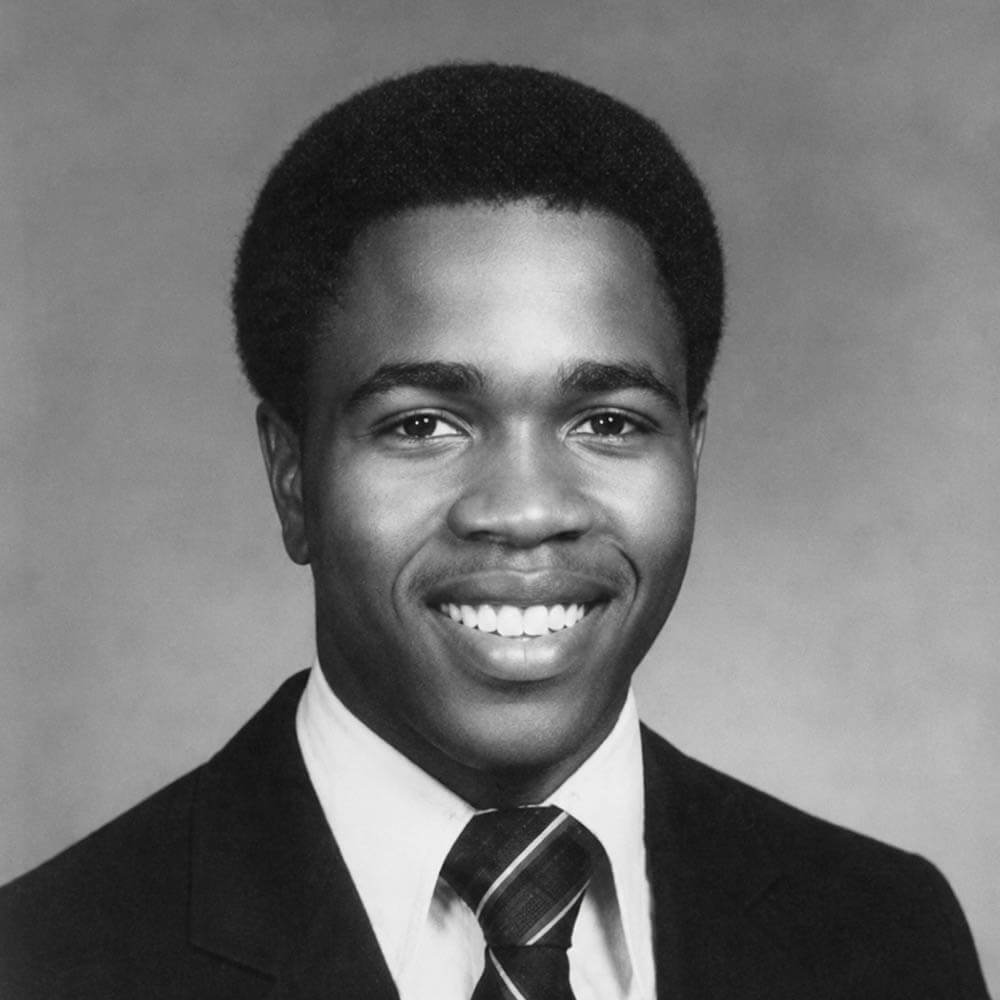
 At the same time, the University found itself facing one of the most significant challenges in its history. In 1971, a legal battle that began in the 60s over BJU’s tax-exempt status placed the institution at the center of a national debate. The dispute stemmed from the University’s interracial dating policy and would continue for many years while drawing widespread public criticism. During this same year, BJU began admitting married black students. According to Standing Without Apology by Dan Turner, Willie Thompson enrolled as the University’s first African American student, marking an important milestone in the institution’s history even as the controversy surrounding race and institutional policy continued.
Amid these challenges, the University continued to expand, undertaking new building projects to accommodate academic and physical growth. These projects included the Founders Memorial Amphitorium, two new dorms—R.K. Johnson and Mary Gaston, the Academy Gymnasium, junior high facilities, and major expansions to both the Alumni Building and Mack Library. By the end of the decade, the University had not only launched new graduate programs, but also programs in nursing and aviation, reflecting its desire to prepare students for a wider range of careers and ministries.

One of the most far-reaching developments of the decade was the creation of BJU Press. Organized in 1973, BJU Press initially published Faith for the Family magazine and soon began producing textbooks written from a biblical worldview. As a growing Christian school movement emerged across the country, BJU became a leader in training teachers and administrators, and its educational materials found their way into thousands of classrooms. The University’s commitment to Christian education was further demonstrated in 1977 when it hosted the first national academic competition of the American Association of Christian Schools—an event that continues to be held on the BJU campus today.

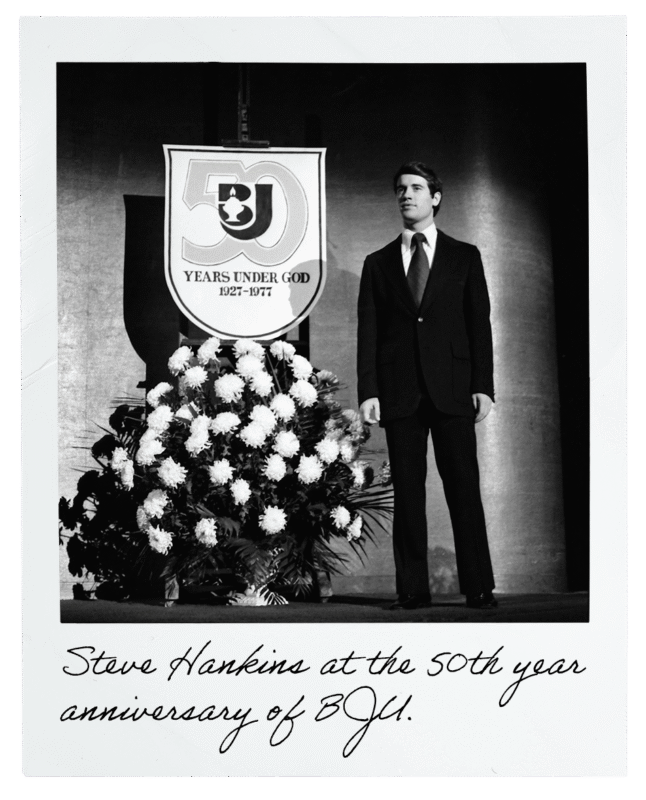
Also during this milestone decade, the University sponsored its first church planters and established the Timothy Program, providing ministry training and financial assistance for international students with the goal of equipping them to return home and serve Christ in their own countries. Additionally, BJU’s media outreach grew significantly, with television programs such as Show My People and the release of Unusual Films’ Sheffey in 1977, a production that would become one of the studio’s most enduring and widely viewed works. And not to be forgotten, Gold Rush Daze—a beloved tradition for decades—was introduced as part of BJU’s celebration of its 50th year, the golden anniversary.


The 1980s marked a season of expansion and opportunity for Bob Jones University. Despite the legal challenges that had emerged in the previous decade, the University entered the 1980s with nearly 5,000 students—the highest enrollment in its history. As the nation experienced renewed optimism and economic growth, BJU continued to strengthen its academic programs and expand its campus. Reflecting this outlook, the University adopted the tagline, “The Opportunity Place…God’s Special Place for You.”
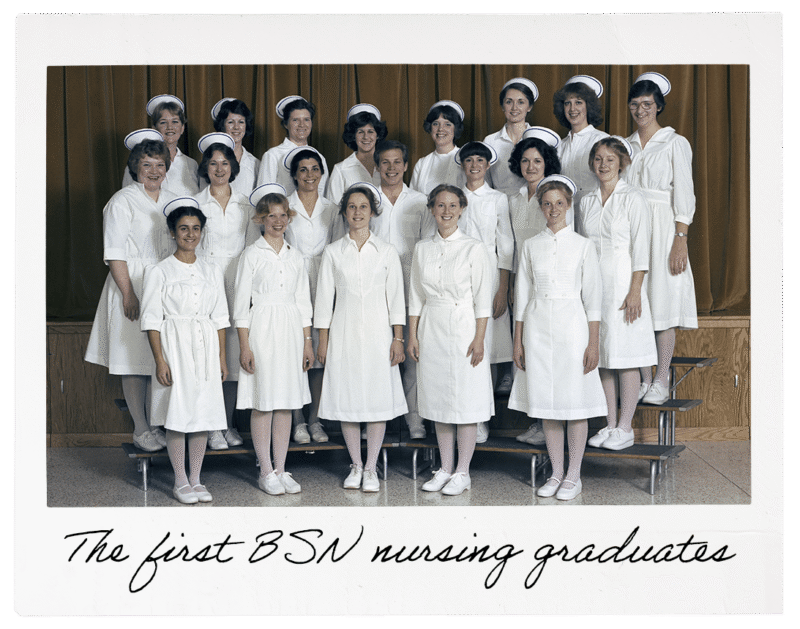
Under the leadership of Bob Jones III, the University continued to invest in preparing students for a wide range of vocations and ministries. The School of Applied Studies, formerly the Institute of Christian Service, expanded beyond ministry training to include programs in fields such as auto and diesel mechanics, construction, agriculture, and aviation. At the same time, new academic programs—including the Bachelor of Science in Nursing—provided additional professional opportunities for students. And much of this decade’s academic growth can be attributed to the leadership of Phil Smith, who was appointed as provost after years of service as dean and registrar. By the end of the decade, BJU offered 77 undergraduate majors and continued to attract faculty members who combined expertise in their disciplines with a commitment to the University’s mission.
Growth was equally evident across the campus. New facilities and renovations enhanced both student life and academic programs, including the Edwards-Riley addition to the Student Center, the Alderson Co-Generation Plant, and expanded facilities for both BJA and the University. In 1981, BJA opened a new elementary school building across White Oak Drive, allowing the former elementary facility to be renovated and repurposed as speech classrooms and Performance Hall.
This decade is also known as a time when BJU broadened its outreach—both internationally and nationally. The WORLD Fund provided financial assistance to international students seeking a Christ-centered education while the University’s radio, publishing, and media ministries continued to extend its influence beyond Greenville, including through Unusual Films, whose growing body of productions now included the 1983 release of Beyond the Night. Looking to the future, BJU began experimenting with distance-learning technology, recording its first courses for off-campus instruction and laying groundwork for future educational delivery methods.

Student life continued to evolve as well. The University reorganized its Sunday school program, replacing denominational classes with groups built around combinations of literary societies, strengthening fellowship among students from a variety of church backgrounds. New opportunities also emerged through expanded student activities, academic publications, and campus organizations. In 1987, The Collegian published its first edition, providing a student voice on campus and offering valuable journalism experience. Academic scheduling was revised as well, placing first-semester exams before Christmas and creating a calendar structure that remains familiar to students today.
While growth characterized much of the decade, one of the most consequential events in BJU’s history reached its conclusion in the courts. In 1983, the United States Supreme Court ruled against the University in its long-running case involving tax-exempt status, upholding the federal government’s position that BJU’s interracial dating policy violated public policy. Although the ruling created significant financial and public relations fallout, the University continued to pursue its educational mission. Years later, in 2008, President Stephen Jones issued an official apology, saying, “We failed to accurately represent the Lord and to fulfill the commandment to love others as ourselves. For these failures, we are profoundly sorry.”


The 1990s opened with sweeping changes around the world. The collapse of the Soviet Union and the end of the Cold War brought an end to decades of geopolitical tension and opened doors that had long been closed to Christian ministry. For Bob Jones University, these developments created new opportunities for gospel outreach, as mission teams expanded their efforts into Eastern Europe and Ukraine, even Russia itself.

Technology and changes in the educational landscape also transformed some of the University’s approach to how they served their prospective clients. In 1990, BJU hosted its first Home Educators’ Leadership Program (HELP Conference), strengthening its connection to the growing homeschool movement. Additionally, BJU Press explored new methods of distance learning for pre-college students—long before online education became commonplace. Through initiatives such as BJ LINC and HomeSat, courses were delivered using VHS tapes, satellite transmissions, and other emerging technologies. And in 1996, the University created its first website, laying the groundwork for future online educational offerings.

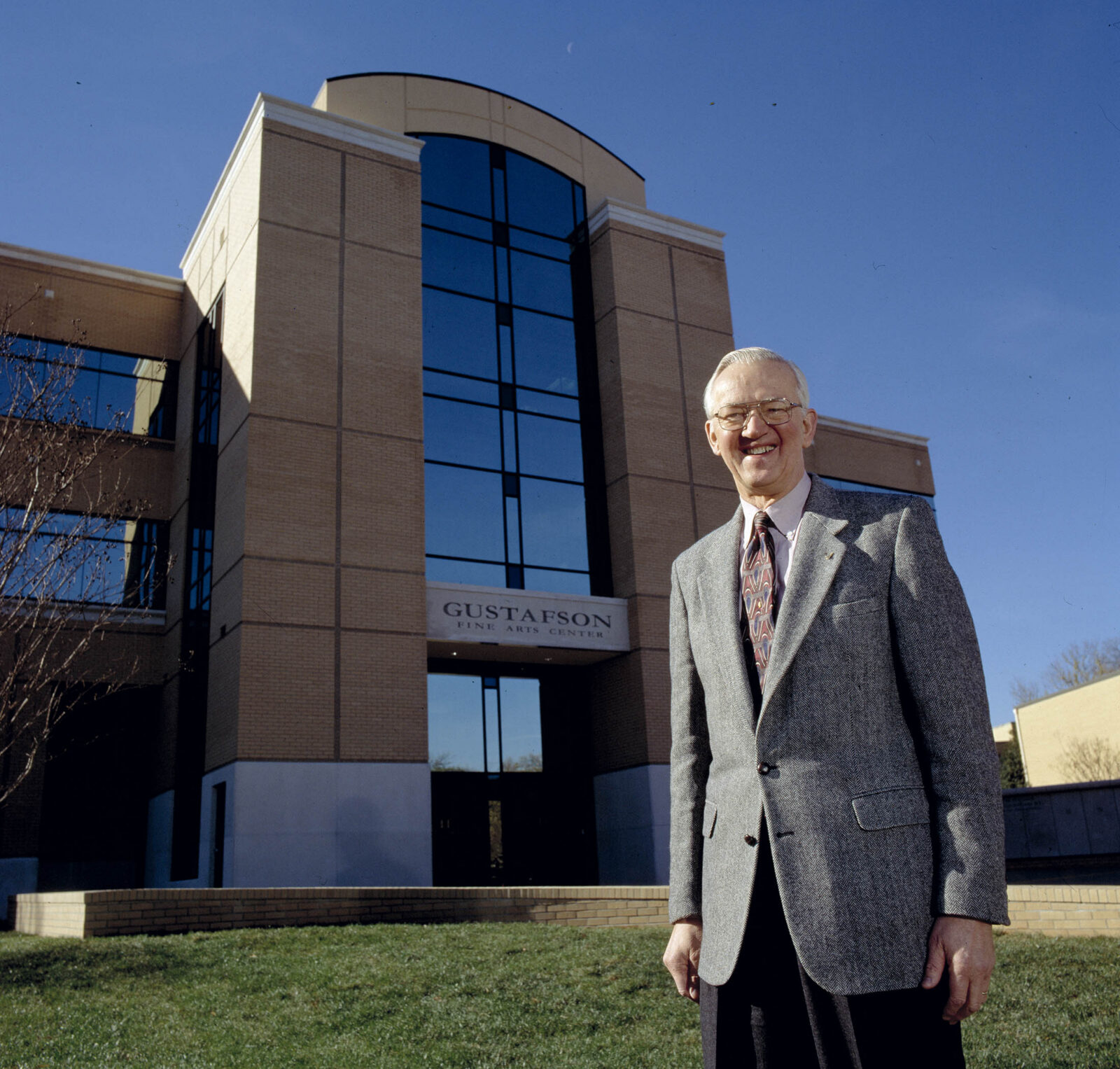
The decade was also one of significant campus transformation. New facilities included the Science Annex, the Fremont Fitness Center, the BJU Press printing facility and warehouse, the Sargent Art Building, and the Gustafson Fine Arts Center. The much-used Concert Center was renovated and renamed Stratton Hall in memory of longtime staff member, Mel Stratton. At the same time, several older structures—including Faculty Court and the co-generation plant smokestack that had long been a familiar part of the campus skyline—were removed as the University continued to modernize its facilities.
Life on campus continued to evolve during the 90s. The first campus Christmas Lighting Ceremony was held in 1990, beginning a tradition that continues today. Meanwhile, Heritage Day replaced Founders Day in 1999, providing a broader opportunity to celebrate the University’s history and mission. Other campus traditions changed as well, including the discontinuation of Sunday dinner as the last remaining family-style meal served in the Dining Common.
As with previous decades, the arts remained a defining feature of BJU. Unusual Films released The Printing in 1990; and in 1998 the University introduced the first Living Gallery, combining tableau vivant, music, and drama in a presentation that would become a beloved annual tradition.

The first decade of the twenty-first century brought significant change to both the nation and Bob Jones University. America entered a new era marked by a contested presidential election, the terrorist attacks of September 11, 2001, rapid technological advances, and the economic recession of 2008—which impacted college enrollment nationwide. As cultural values continued to shift and traditional institutions faced increasing scrutiny, BJU sought to remain faithful to its mission while adapting to the opportunities and challenges of a new century.
Leadership transitions helped shape the University’s direction during this period. In 2005, Stephen Jones became the fourth president of Bob Jones University, while Bob Jones III assumed the role of chancellor. Seeking to prepare the institution for the future, the administration adopted a more traditional organizational structure, streamlined academic programs, and pursued broader recognition for the University’s academic work. A significant milestone came in 2006 when BJU received accreditation from the Transnational Association of Christian Colleges and Schools (TRACS), affirming the quality of its academic programs while maintaining its distinctive mission and convictions.
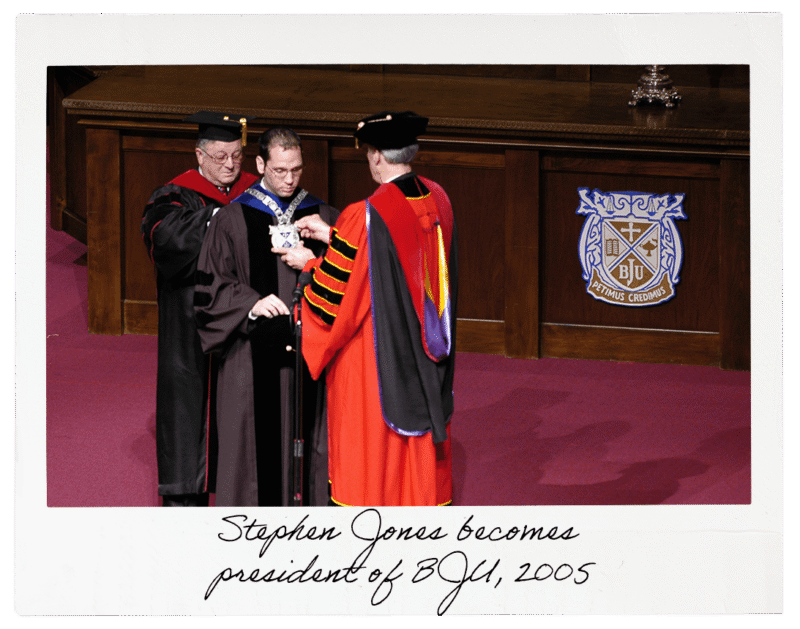
The decade also brought important conversations about the University’s history and public identity. Early in 2000, a visit by presidential candidate George W. Bush drew national attention to BJU’s positions on Catholicism and interracial dating. Shortly afterward, Bob Jones III announced the end of the University’s interracial dating policy and in 2008, Stephen Jones publicly apologized for the institution’s past racial discrimination.


At the same time, campus culture experienced notable change. Under Stephen Jones’s leadership, the University took a fresh look at student life, discipleship, and institutional practices, exploring ways to strengthen student engagement while maintaining its core convictions. Many of the conversations and initiatives begun during this period would lead to significant changes in the following decade.
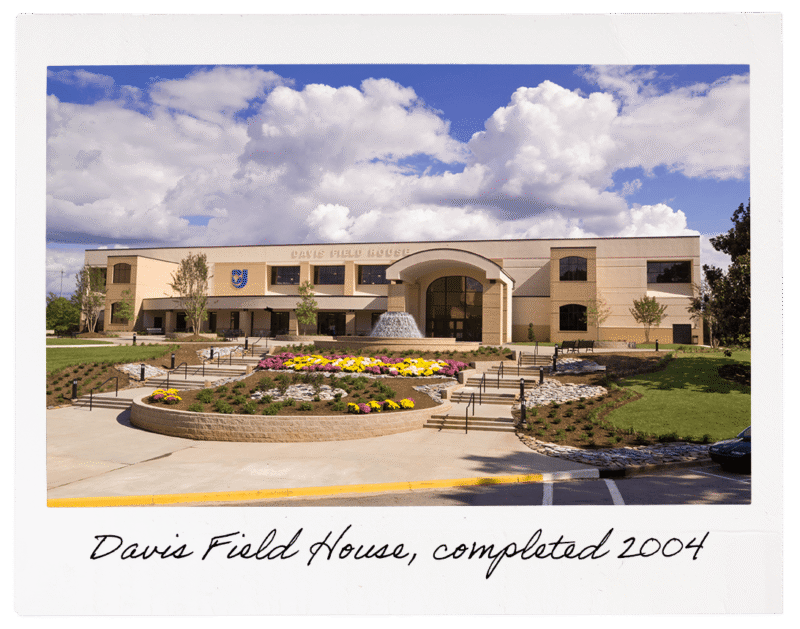
As BJU adapted to a new era, the campus itself continued to evolve. New construction projects included the Bob Jones Jr. Memorial Seminary and Evangelistic Center, the Activity Center, the Davis Field House, a parking garage, and a redesigned front entrance to campus. Numerous renovations improved existing facilities, including the dining common plaza, Rodeheaver Auditorium lobby, faculty office wing, and Pennington Child Development Center.
The year 2007 brought a series of significant challenges that tested the University’s resilience, preparedness, and commitment to its biblical convictions. BJU became the focus of attention from an LGBTQ advocacy organization seeking changes to institutional policies—this same group visited 19 other Christian colleges in 2006 with the same objective. Under Stephen Jones’s leadership, BJU responded with a firm but non-confrontational approach, seeking to articulate its biblical position while maintaining normal campus operations. The University also faced an outbreak of pertussis that affected more than 150 students and resulted in the early conclusion of the fall semester, marking the only time in university history that a semester ended ahead of schedule.
Later that same year, the nation—and BJU—was shocked by the killing of 32 people and wounding of 17 others at Virginia Tech. This tragedy prompted BJU to strengthen its safety procedures and emergency preparedness efforts, leading to the creation of a campus-wide emergency notification system that communicates with each person in seconds.

As BJU entered a new decade in 2010, the country was still recovering from the recession two years earlier, and unemployment was hovering around 9 percent. Both situations added pressure to university enrollment already impacted by the closing of many Christian feeder schools. Yet, despite these challenges, the University achieved a number of important milestones during this decade.
Key among these milestones was regional accreditation. After years of carefully evaluating the issue, the Board of Trustees and President Stephen Jones made the decision in 2011 to pursue accreditation through the Southern Association of Colleges and Schools Commission on Colleges (SACSCOC). The effort was then led by Provost and Executive Vice President Gary Weier and his team, who guided a comprehensive review of institutional policies, academic programs, and operational practices across the University. Following years of campus-wide preparation and the installation of a new president, regional accreditation was fully granted in 2017, affirming BJU’s academic rigor and expanding opportunities for graduates. Academics continued to advance in other ways as well. The University launched study abroad programs, expanded internships across academic disciplines, and established the School for Continuing, Online and Professional Education (SCOPE) to serve non-traditional learners. Partnerships with Furman University and Clemson University also enabled qualified students to participate in Army and Air Force ROTC programs.

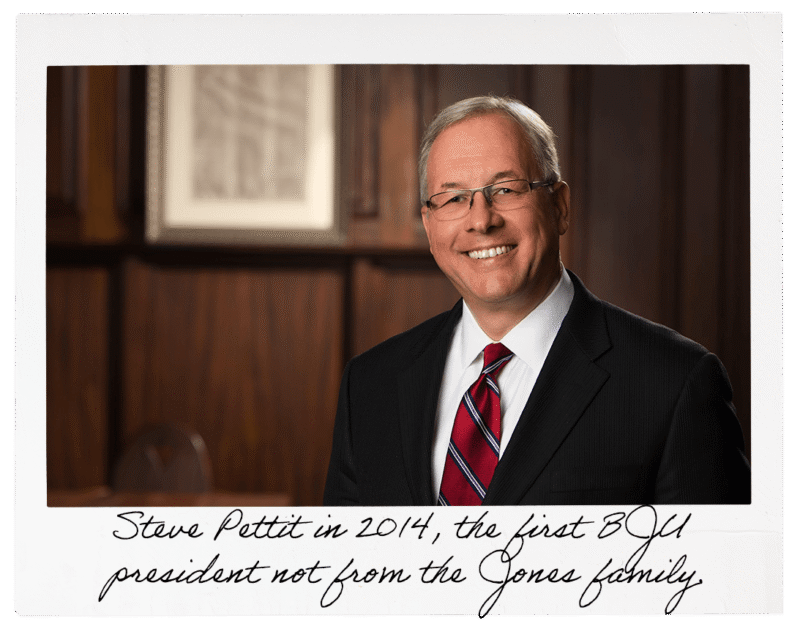
Leadership transitions played an important role throughout the decade. In 2013, Larry Jackson became the first person outside the Jones family to serve as chairman of the Board of Trustees. Later that year, Stephen Jones resigned as president due to health concerns, and in 2014 Steve Pettit became the fifth president of Bob Jones University and the first president not from the Jones family. Under his leadership, the University pursued several new initiatives, including the restoration of federal tax-exempt status. In 2017, after reorganizing into nonprofit and for-profit corporations, BJU successfully regained its tax-exempt status for the first time in more than three decades.
Campus life also experienced notable change. In 2012, intercollegiate athletics returned to BJU after an absence of nearly eighty years, and students selected the Bruin as the University’s mascot. Long-standing traditions and practices also evolved. The required on-campus Sunday morning church service ended, Vespers was discontinued, and student schedules were revised with the addition of Spring Break. Renovations transformed student gathering spaces, including the creation of The Den in the former Campus Store and Snack Shop, while facilities such as the Kalmbach Room were redesigned to better serve student needs.
The decade also brought significant institutional and operational changes. Bob Jones Elementary School, Junior High, and Academy were united under the name Bob Jones Academy. WMUU radio station was sold, and the SoundForth music division of BJU Press was transferred to new ownership. The University outsourced dining common operations, consolidated Mack Library into a smaller footprint within the renamed Mack Building, and renovated administrative and student-service spaces in the Student Center area.


As Bob Jones University entered the decade that would culminate in its centennial celebration, it faced one of the most significant challenges in its history. In March 2020, the COVID-19 pandemic forced the University to suspend in-person classes and complete the semester through remote instruction and a virtual graduation. With the decisive leadership of President Pettit, careful planning, and the dedication of faculty, staff, and students, the University successfully reopened for in-person learning in August 2020.

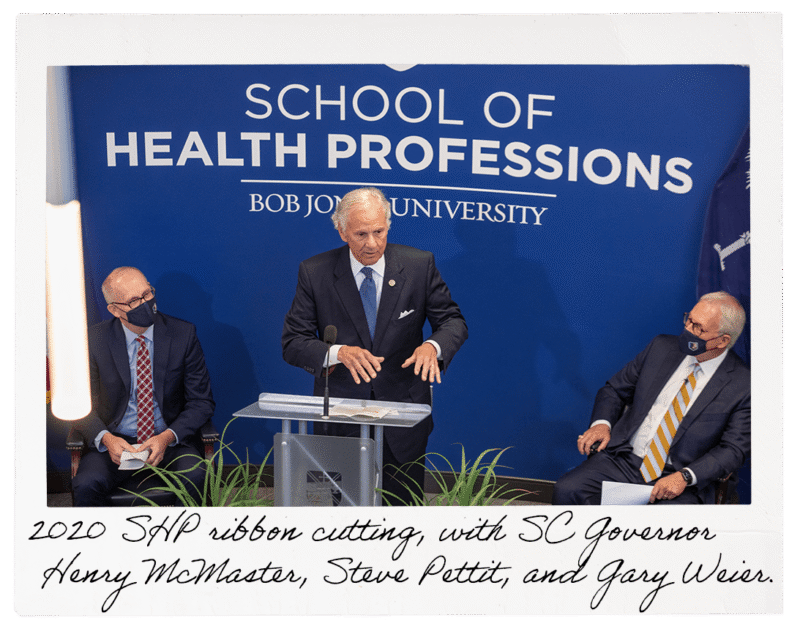
Throughout the decade, BJU continued to strengthen its academic programs and student experience. The School of Health Professions opened in the Mack Building in 2020, reflecting growing opportunities in healthcare education. In late 2022, SACSCOC reaffirmed BJU’s regional accreditation for another ten years. Additional accreditation milestones included the nursing simulation center by the Society for Simulation in Healthcare and the School of Music by the National Association of Schools of Music. Together with existing approvals and accreditations in nursing, engineering, and teacher education, these achievements affirmed the continued strength and quality of BJU’s academic programs.
 The decade also brought significant leadership transitions. President Steve Pettit resigned in 2023 after nearly a decade of service. Dr. Alan Benson guided the institution as acting CEO before Dr. Josh Crockett was named president in 2024. Following Dr. Crockett’s resignation in 2025, the Board of Trustees selected Dr. Bruce McAllister as the University’s seventh president, while Dr. David Fisher was appointed provost and executive vice president. Under their leadership, the University adopted a new brand promise along with the tag line, “Pursue a Higher Calling,” capturing its renewed commitment to preparing students for lives of service to Christ.



 Born in Virginia, and orphaned at eight, Johnson almost immediately became a student leader when he arrived at BJC in 1931. He was elected president of the 1935 senior class. While he was still a student, Bob Jones Sr. named Johnson the college business manager, and he retained that title for the rest of his life. Johnson’s pay-as-you-go business policy played a significant role in helping BJU survive the loss of its federal tax exemption in 1983. Before his death from a heart attack in 1971, Johnson wrote a commemorative biography of Bob Jones Sr., which includes a chapter on the construction of the Greenville campus in which Johnson himself played a significant role. After his death, a men’s residence hall was named in his memory.
 Born in Hocking County, Ohio, Homer Rodeheaver was reared in eastern Tennessee and there became familiar with local mountain ballads and Negro spirituals. He learned to play trombone while attending Ohio Wesleyan College. From 1910 to 1930, he served as music director for evangelist Billy Sunday, but he made much more money as a pioneer gospel recording artist and music publisher. Will Rogers said, “Rody is the fellow that can make you sing whether you want to or not. I think he has more terrible voices in what was supposed to be unison than any man in the world. Everyone sings for Rody!” Rodeheaver made a large contribution toward the construction of the Auditorium, and it is named in his honor.
 The son of a Cincinnati shoemaker, Charles Brokenshire displayed a remarkable gift for languages and distinguished himself as a biblical scholar. He graduated from Marietta College, summa cum laude, in 1907 and thereafter studied with some of the finest conservative scholars at Princeton Seminary. Though he nearly completed a PhD twice, he ultimately did not finish either program. Alma College awarded him an honorary doctorate. Brokenshire came to Bob Jones College in 1943, and he served until he died the day he turned in his final grades in 1954. A men’s residence hall is named in his honor. Brokenshire was essentially the founder of BJU’s Graduate School of Religion.