

The Scopes “Monkey” Trial ended July 21, 1925, and William Jennings Bryan died five days later.
In September or early October 1925, Bob Jones Sr. decided to found a nondenominational college in the Florida panhandle.
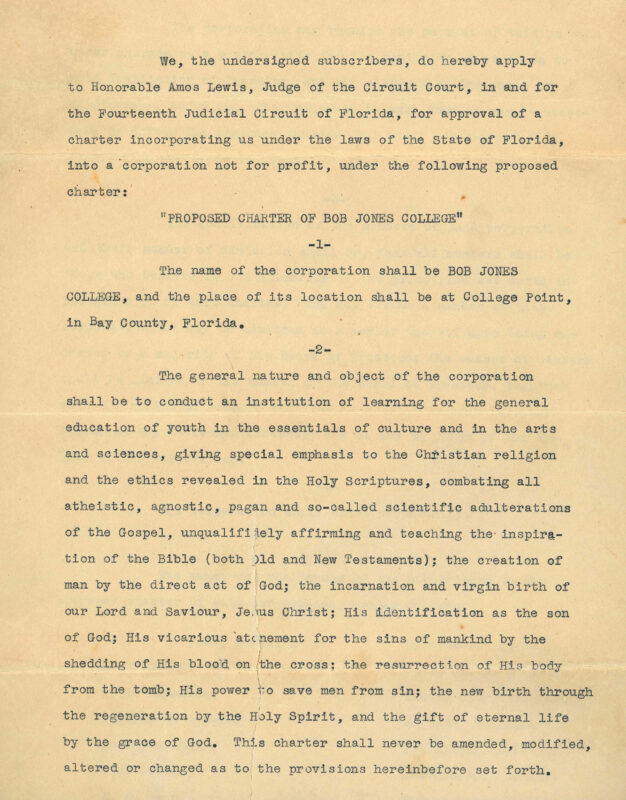
The Bob Jones College charter was signed April 8, 1926, in Panama City, Florida.

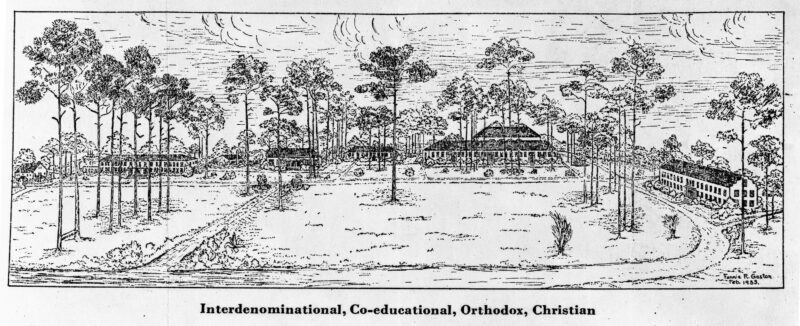
Groundbreaking occurred on December 1, 1926, at College Point, near Lynn Haven.
BJC opened on September 14, 1927, at College Point on St. Andrews Bay with a junior college curriculum.
The first Twilight Musicale was performed, soon called Vespers.
Bob Jones Sr. unintentionally created the first branding tagline: “Interdenominational. Orthodox. Educationally Strong. Spiritually Safe.”

The first Commencement was held on June 5.
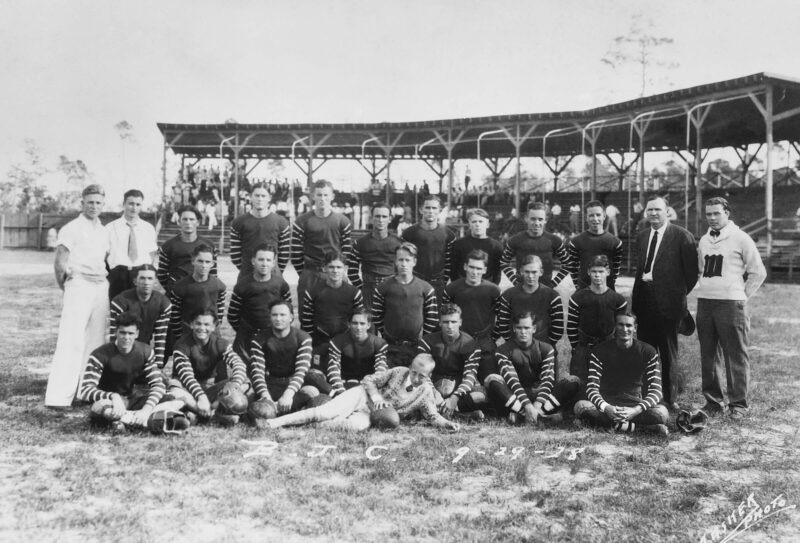
The first BJC football game was played against Bay High School.
Bob Jones Sr. fired a respected faculty member for promoting religious liberalism, and about half the faculty left with him.
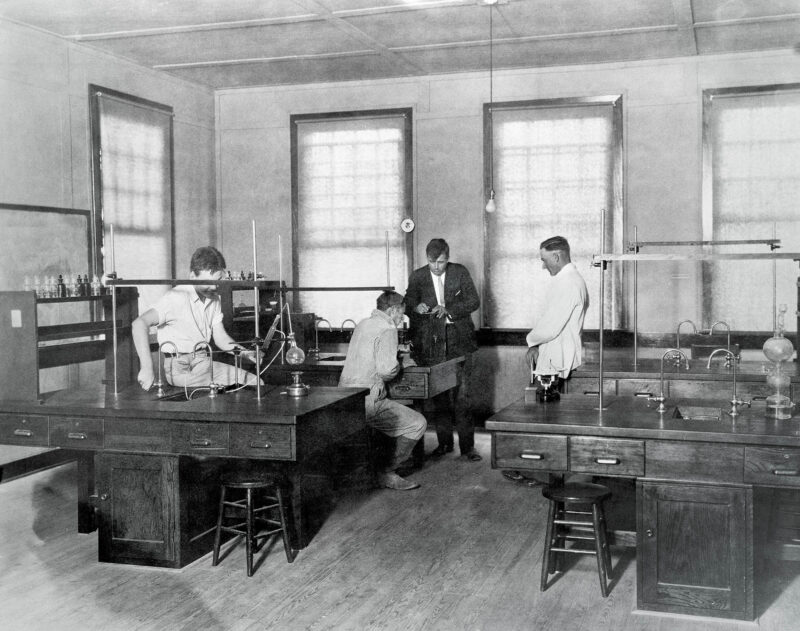
BJC adopted a four-year baccalaureate curriculum.
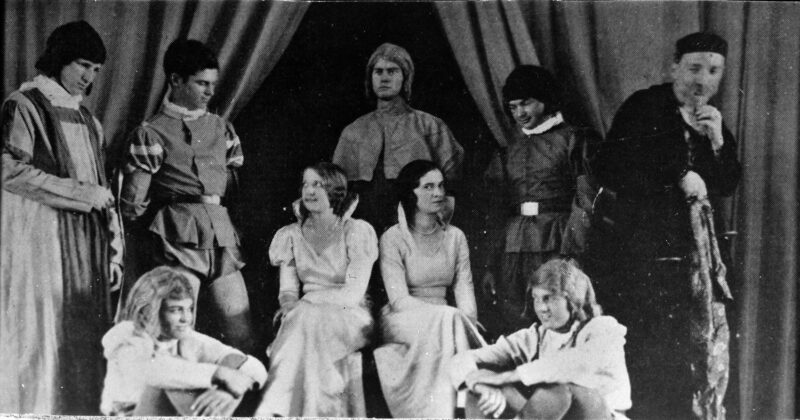
The Classic Players was created to perform Shakespearean plays.

- BJC had its first graduating class.
- The first BJC yearbook, San Andros, was published.
- The Merchant of Venice became the first Classic Players production.
- The first four-year graduating class received its degrees.
- Faculty salaries were cut, and remuneration thereafter was based on need rather than on degrees or years of service because of the school’s deepening financial crisis.
- Bob Jones Sr. ended intercollegiate football.
- Graduate theological training was offered for the first time.
- BJC ended all intercollegiate athletics.
- BJC filed for bankruptcy and moved to the campus previously owned by Centenary Female College in Cleveland, Tennessee.
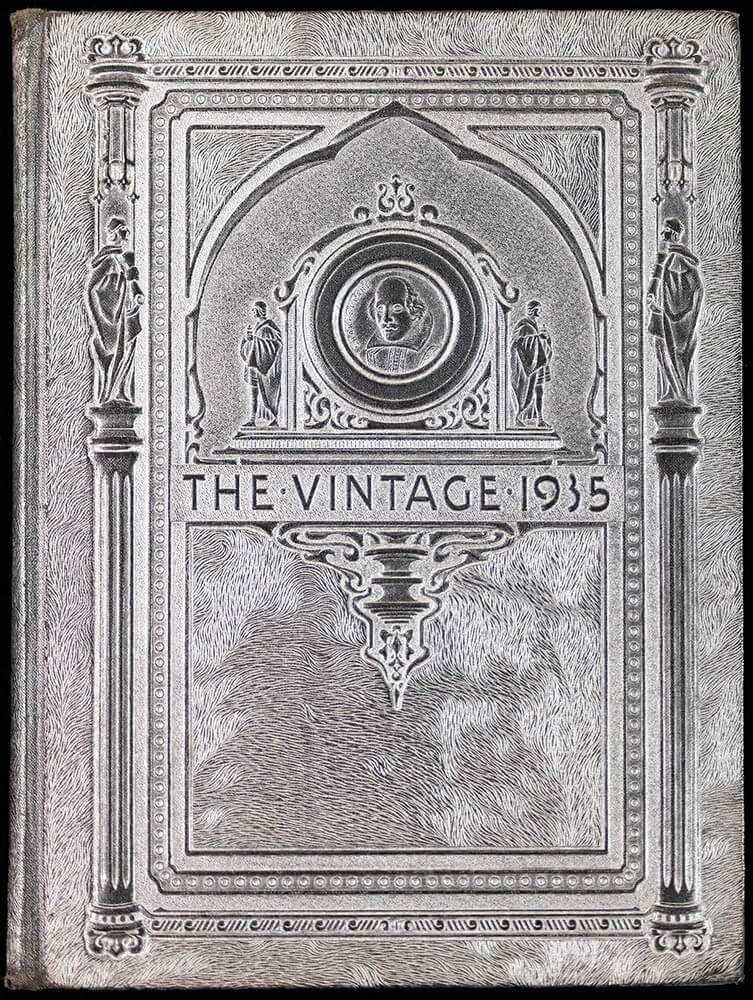
- The first Vintage yearbook was published.

- The college crest was created by Bob Jones Jr.
- Bob Jones Sr. founded the Gospel Fellowship Association.

Shortly before his death in September, Sephus Mack, BJC’s greatest benefactor, told Bob Jones Sr. to “construct your buildings and send me the bill.”

The Mack Memorial Library on the Cleveland campus was dedicated.

- The first issue of the alumni newsletter, Little Moby’s Post, was published.
- Gounod’s Faust became the first performance of the Opera Association.
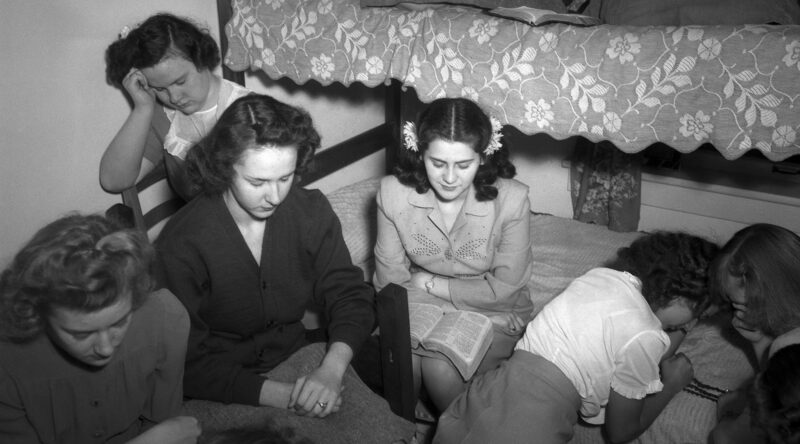
- Dormitory prayer groups and prayer captains were initiated.
- The new tag line, “America’s Most Unusual College,” was adopted.
- The Bob Jones University Hymn, with words by Bob Jones Jr. and music by Harriet Parker was first sung at Commencement.
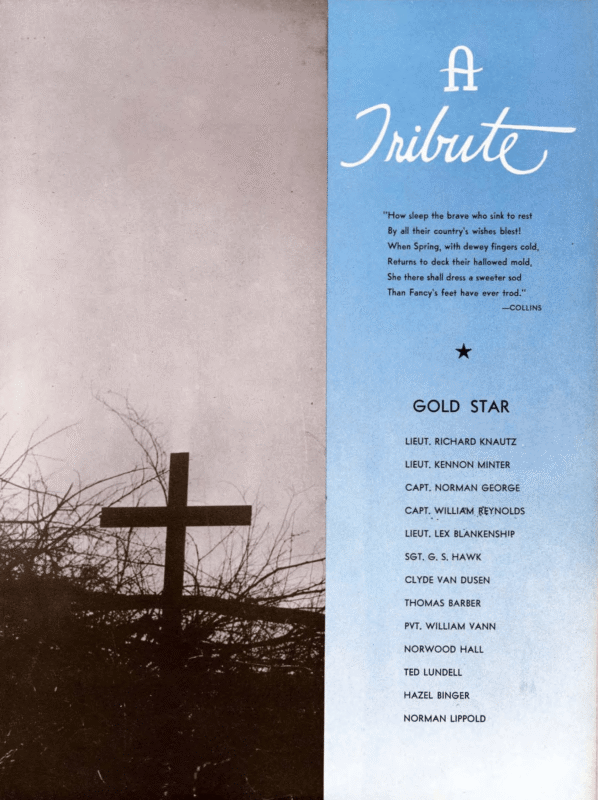
Thirteen former students killed during World War II were memorialized in the Vintage.

- College enrollment surpassed 1000, in large measure due to an influx of World War II veterans who were receiving stipends from the federal G. I. Bill.
- BJC became the largest liberal arts college in Tennessee—just 13 years after filing for bankruptcy in Florida.
- On April 25, Bob Jones Sr. announced that the Cleveland campus would be sold to the Church of God and that the school would move to Greenville, South Carolina.
- Well-respected industrial contractor, Charles Daniels, was hired to construct the new buildings on the Greenville campus. He did so, as promised, in 18 months.
- In March, the tagline was modified to “World’s Most Unusual University,” a tagline used until 1986.
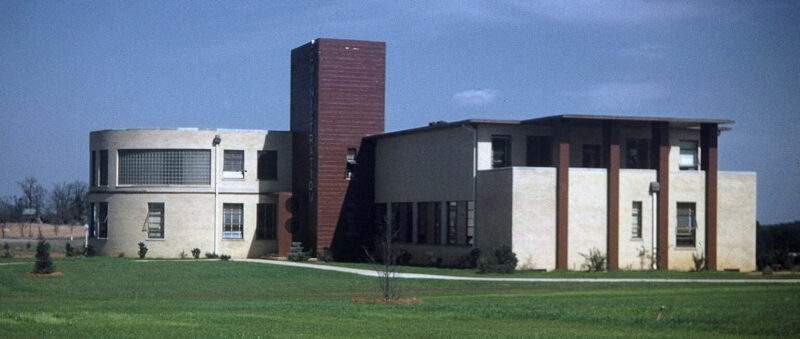
- BJC became Bob Jones University and moved to Greenville.
- Bob Jones Jr. was named president.
- Many new campus buildings—including the Administration Building, the first Dining Common, the Student Center, Rodeheaver Auditorium, Mack Library, Bibb Graves, Margaret Mack, J.Y. Smith, Grace Haight and Nell Sunday—were completed and dedicated together at Thanksgiving.
- The first PhD degree was awarded.

- The first true logo, a stylized rendering of the Administration Building, was introduced.
- The first campus hospital was built; it was later repurposed as the Academy’s Brown Building.
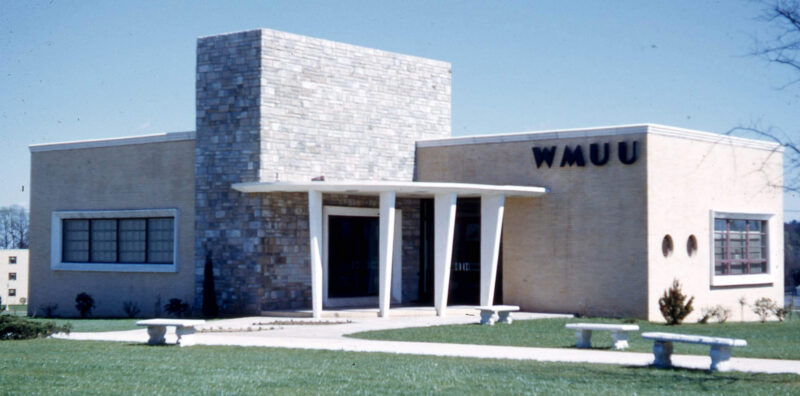
- Radio station WMUU (“World’s Most Unusual University”) went on the air.
- The University Laundry and Cleaners opened.
- The first championship soccer game was played on Thanksgiving.
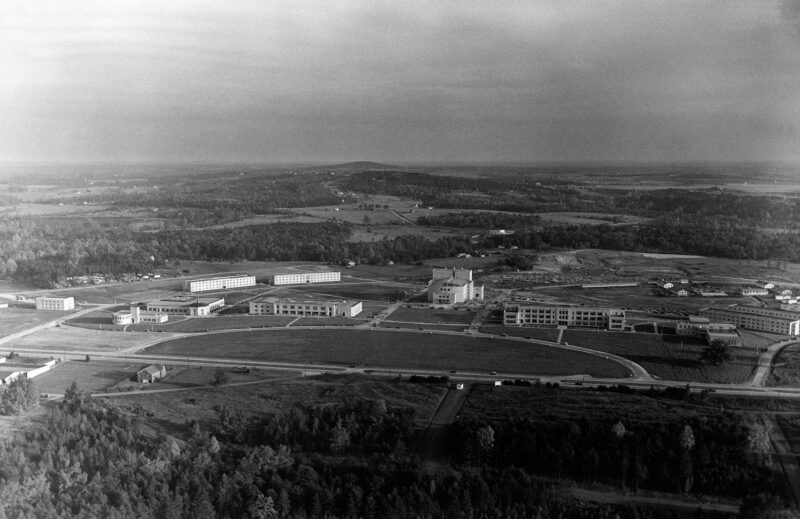
Unusual Films created.
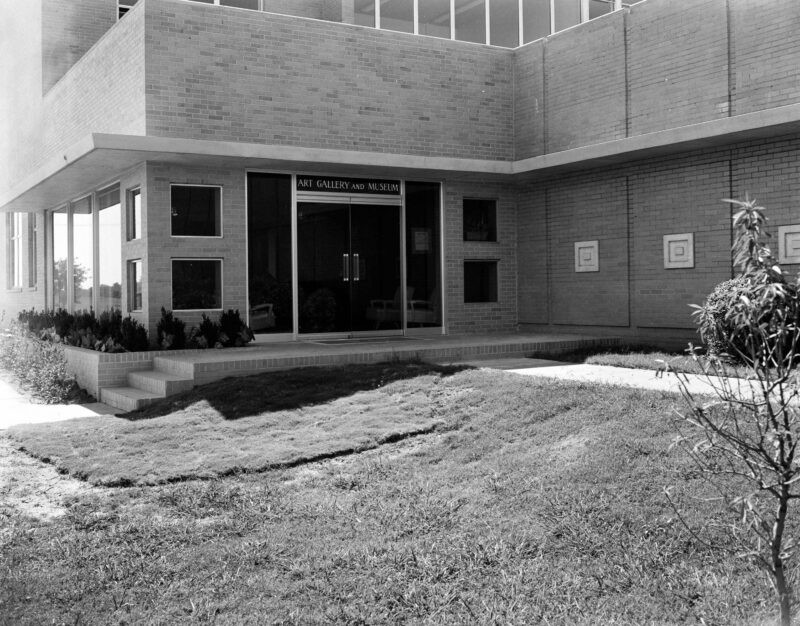
- On Thanksgiving Day, Bob Jones Jr. opened the Bob Jones University Biblical Museum and Art Gallery with 25 paintings.
- Unusual Films released its first motion pictures, including Light of the World.
- Brokenshire dormitory was built.

Unusual Films released the first sermon film of Bob Jones Sr., You Can’t Win.

- Three deans and roughly 50 faculty members resigned after the firing of the Assistant to the President.
- Dixie-Home Store, an 11,000 square-foot supermarket, built with the same color bricks as BJU buildings, opened next to the campus.
- The championship soccer game at Thanksgiving was officially called the Turkey Bowl.

- Rodeheaver Auditorium became the first air-conditioned building on campus.
- During the summer, BJU installed in Rodeheaver Auditorium a revolving stage, an orchestra pit, three stage elevators and a large turntable purchased from the soon-to-be-demolished Center Theater in New York City.

- Unusual Films released Wine of Morning, its first feature-length film.
- The Voice of the Alumni was first published.
- Georgia Creel dormitory was built.

The Fine Arts Building was completed and connected to the 1951 museum and gallery.
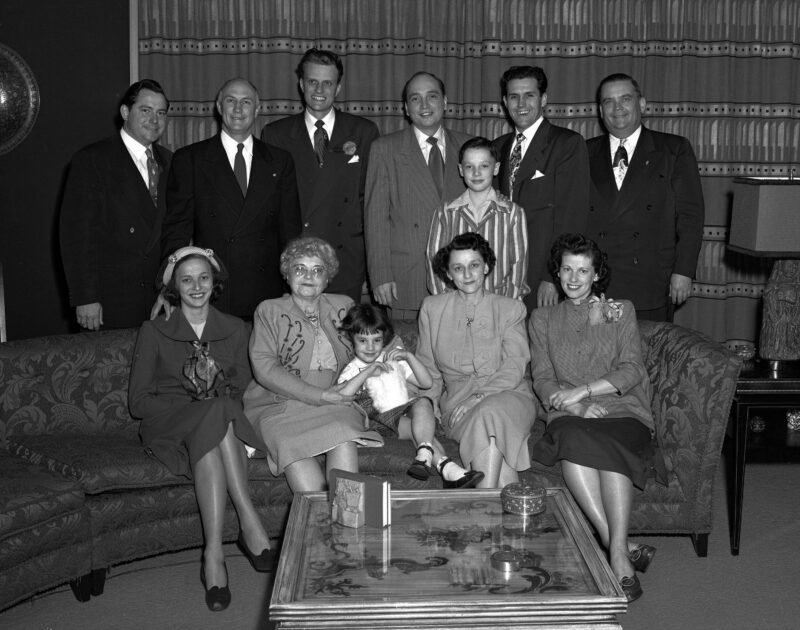
- Bob Jones Sr. and Bob Jones Jr. strongly opposed cooperative evangelism in which Bible believers and unbelievers were joined in supporting evangelistic campaigns.
- The Institute of Christian Service was created as a three-year, non-degree Bible college program.

The gymnasium, including a swimming pool, opened April 11.

- The Howell Memorial Science Building was completed.
- Planetarium programs began to be presented in the dome of the science building.
- The former Student Center gymnasium was converted into an auditorium and renamed the Concert Center.
- Melton Wright’s Fortress of Faith: The Story of Bob Jones University was published.
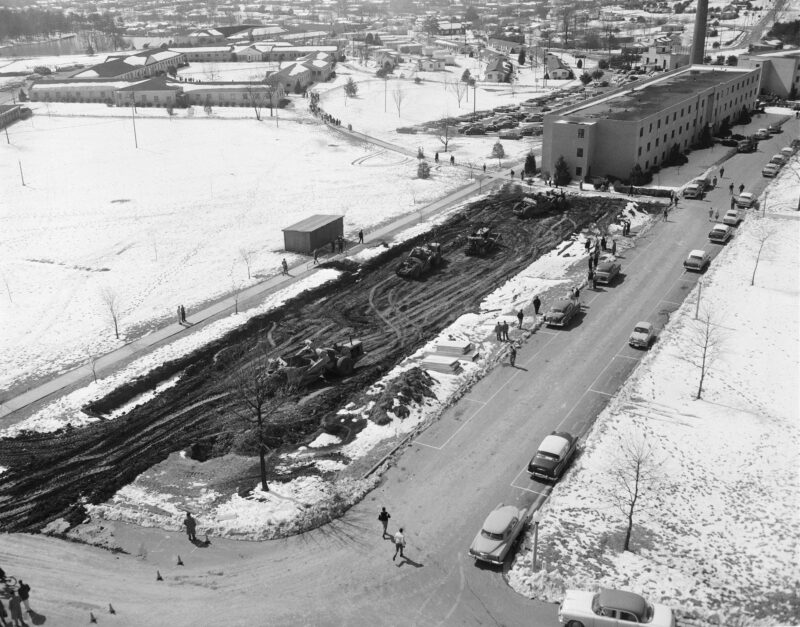
Estelle Siddons and Ernest Reveal dorms were completed.

- Unusual Films released Red Runs the River.
- Benjamin West paintings, The Progress of Revealed Religion, were acquired and displayed in the newly air conditioned War Memorial Chapel.
- The University purchased WAVO, an Atlanta-area radio station.

- Bob Jones Sr. retired as chairman of the Board of Trustees.
- Bob Jones III was named vice-president.
- Cafeteria-style meals were introduced in the Dining Common for weekday lunches; other meals continued to be served family style with required attendance and assigned seating.
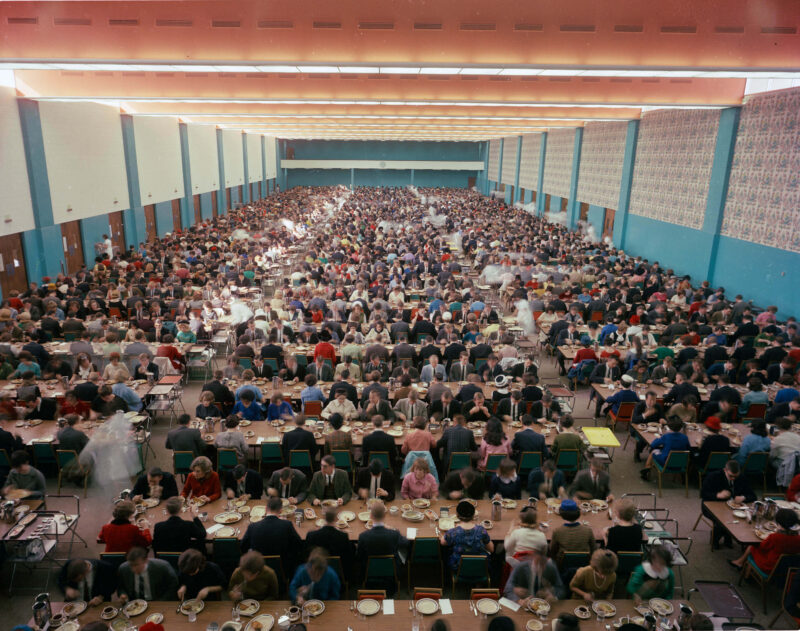
- The second Dixon-McKenzie Dining Common was built around the existing Dixie-Home store, which became its kitchen.
- Breakfast and lunch were served cafeteria style, while evening meals and Sunday dinners continued to be served family style with assigned seating that changed every six weeks.
- The former Dining Common was renovated to become the Art Gallery and Museum.
- The Administration Building was enlarged with a three-story wing.
- The central fountain and Bridge of Nations were completed, the fountain providing air conditioning for the new Dining Common.
- The first covered sidewalks were installed.

- Bob Jones Sr. retired from Board of Trustees and was thereafter largely confined to a small apartment in the campus hospital.
- A St. Lucia medical mission project, Project Compassion, led by Dr. John Dreisbach, became the first official BJU summer mission team.
- The WBJU campus radio station went on the air.

- Bob Jones Sr. died on January 16.
- Alumni Stadium was built.
- Campus View Apartments was built across Wade Hampton Boulevard.

In August, the first baby was born in the new Barge Memorial Hospital.

The Elementary School was built next to the Nursery.

- Bob Jones III became president.
- Unusual Films released Flame in the Wind.
- Lecture Rooms A & B and additional faculty offices were added to the Alumni Building.
- BJU sponsored its first church planters.
- Atlanta radio station WAVO was sold.

- Founders Memorial Amphitorium was dedicated.
- The University officially launched BJU Press.
- Bob Jones Jr. started Faith for the Family magazine.

- The first BJU Press textbook—Physical Science—was published.
- Pleasant Pastures, a university farm, was purchased.
- The first High School Fine Arts Festival was held.
- During the summer, the Alumni Building was carpeted and air conditioned; ceilings were lowered, and new lights were installed.
- Show My People began production in October, and the first TV programs were aired in January 1977.
- A memorial was dedicated on the site of the Florida campus to celebrate the University’s 50th.

- R. K. Johnson and Mary Gaston dormitories were completed.
- Four older dormitories were air-conditioned.
- Unusual Films released Sheffey.
- The Timothy Program was created to provide foreign nationals with ministerial training.
- The first “Gold Rush Daze,” a day of student recreation, was held. It continued to be held every four years until 2017, when it became the biennial “Bruins Daze.”
- Bob Wood became executive vice president.

- The South Carolina State Board of Nursing approved the BSN program.
- BJU created Cornerstone Aviation.
- On May 1, groundbreaking occurred for a substantial Mack Library addition with construction completed the following year.
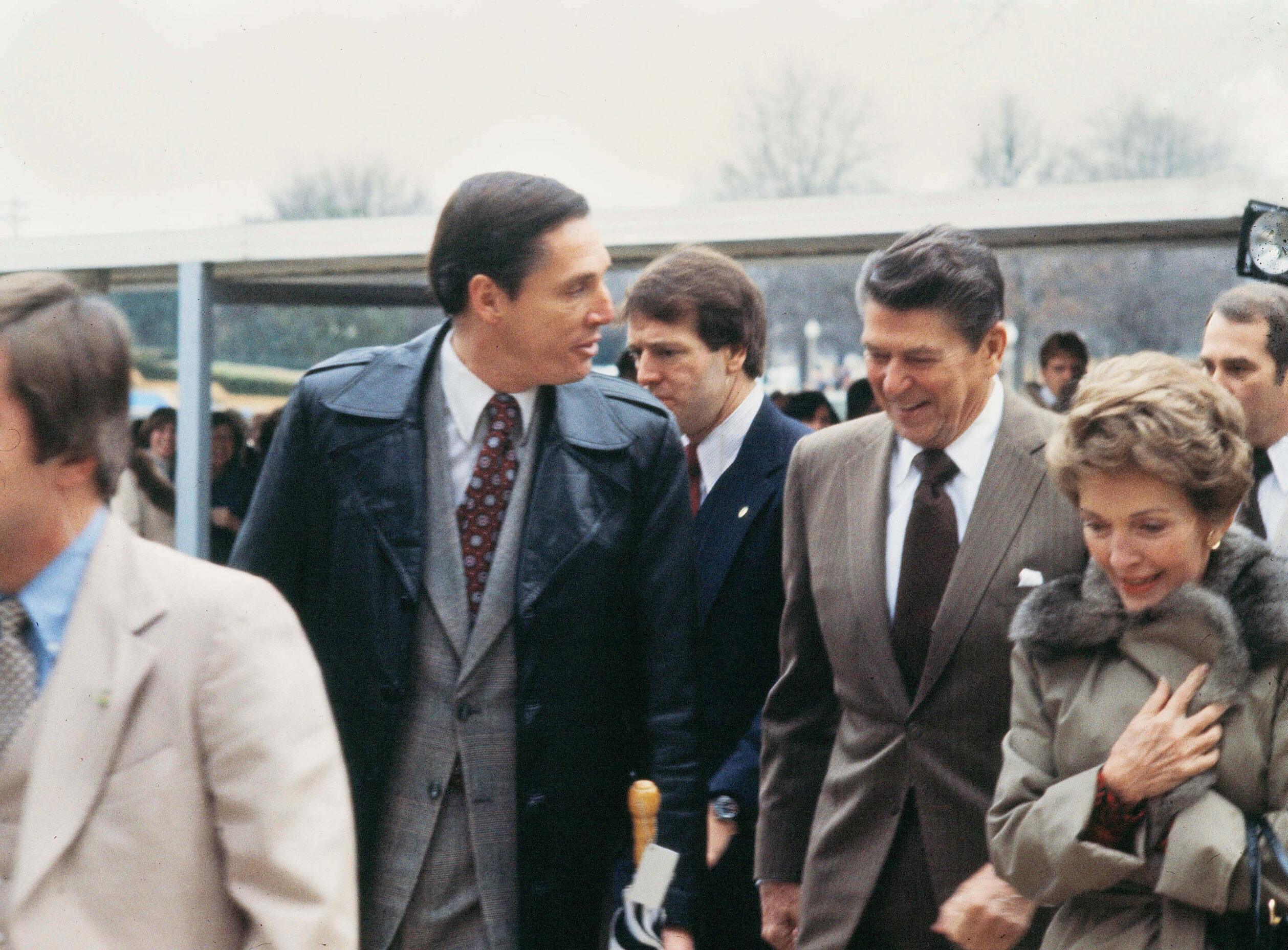
- Ronald Reagan made a campaign speech at BJU.
- For the first time, BJU hosted the American Association of Christian Schools (AACS) national competition.
- A new Elementary School building was built across White Oak Drive, and the former school was remodeled as speech classrooms and Performance Hall.
- Denominational Sunday school classes were ended in favor of classes organized by combinations of literary societies.

- The Edwards-Riley addition to the Student Center was completed.
- The Institute of Christian Service became the School of Applied Studies, which granted associate degrees rather than certificates.
- On May 24, the U.S. Supreme Court ruled against BJU, finding that its interracial dating rules violated “fundamental national public policy.”
- Unusual Films released Beyond the Night.
- Faith for the Family magazine ceased publication.
- The Show My People TV program was discontinued.
- The first recordings for distance learning classes were made in the Rupp Room of the Amphitorium.
- A pedestrian bridge was built over North Pleasantburg Drive.
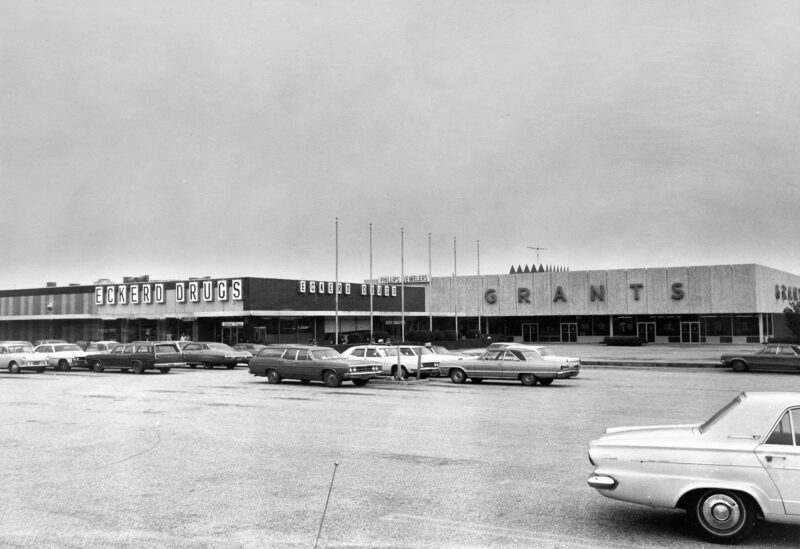
- BJU purchased Wade Hampton Mall.
- A new tagline, “The Opportunity Place…God’s Special Place for You” was adopted, along with the slogan “BJ Cares.”
- The first edition of a campus newspaper, The Collegian, was published with Bob Jones IV as editor.
- For the first time, first semester exams were given before Christmas, and second semester began immediately after the Christmas break.
- All family-style meals except Sunday dinner were discontinued.
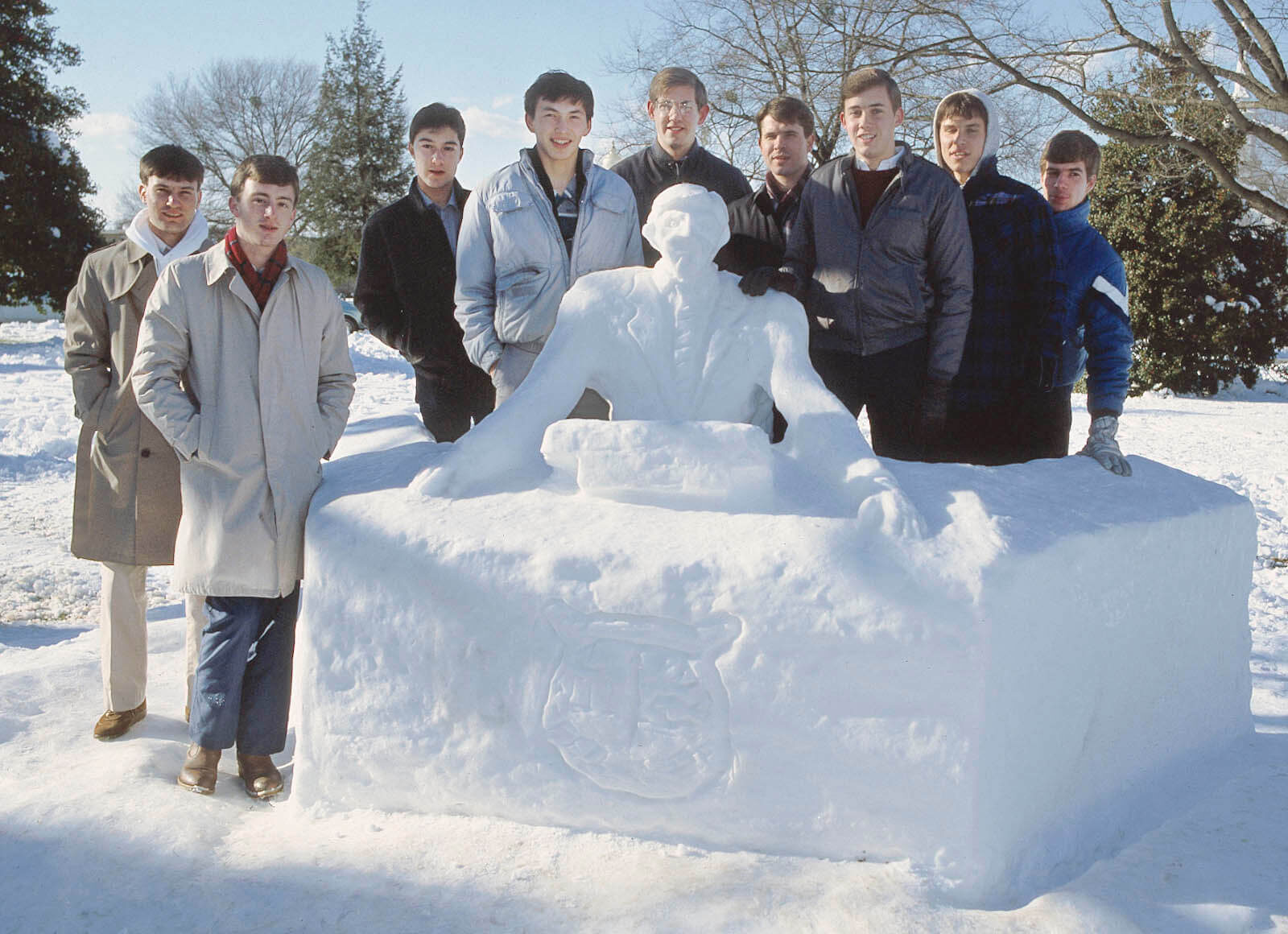
- On January 22, a heavy snowstorm brought down the two covered-walkway arches nearest FMA, and students, given the next day off, created a number of sophisticated snow sculptures.
- The Alderson Co-Generation Plant was completed and began to produce energy.

- Unusual Films released The Printing.
- The Science Annex was completed.
- The first Christmas lighting ceremony was held.
- The first Home Educators’ Leadership Program (HELP Conference) was held in June.

- The Fremont Fitness Center opened.
- Sunday dinner, the last family-style meal in the Dining Common, was discontinued.
- The planetarium closed.
- The Gazebo was completed.
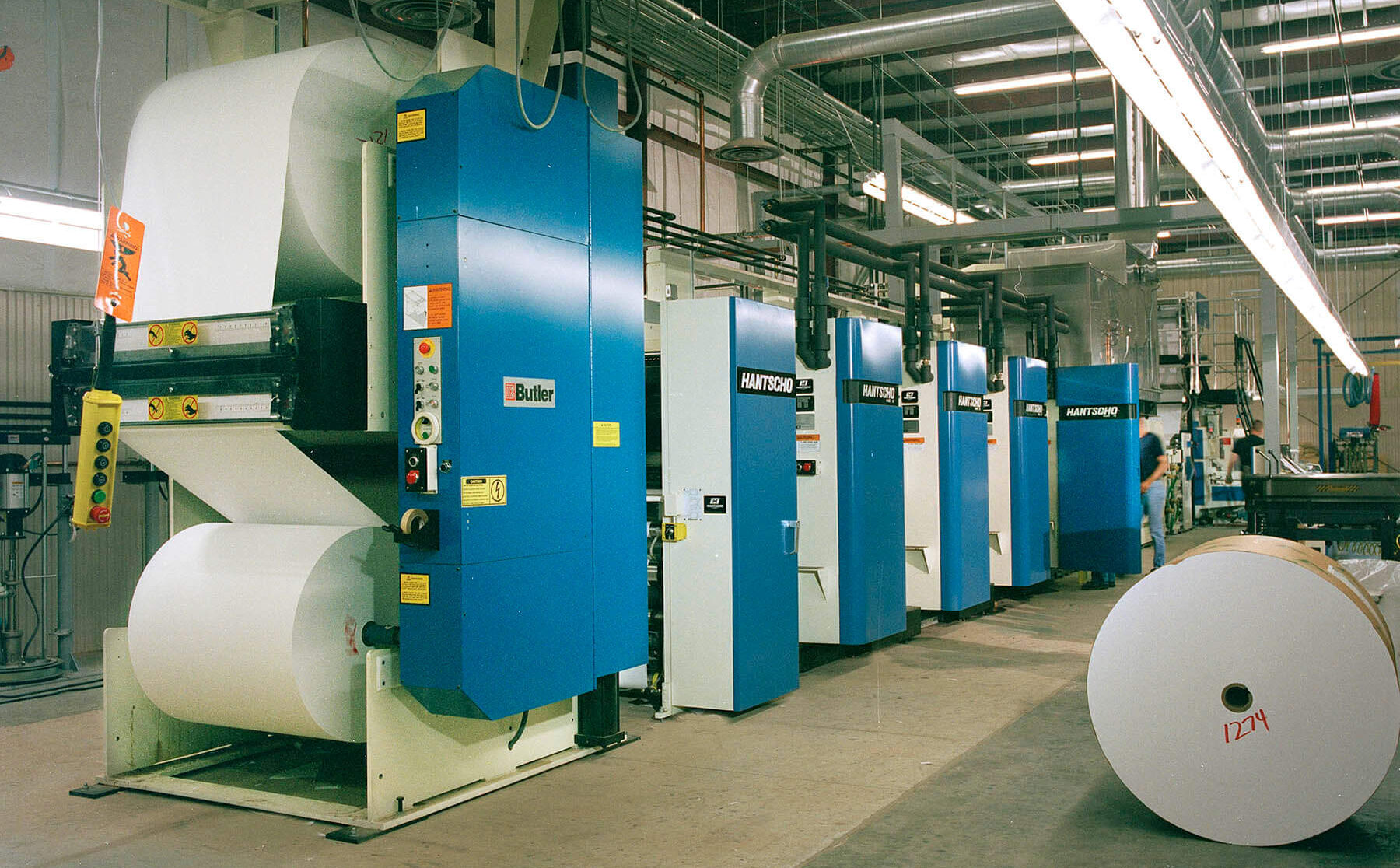
- A new BJU Press printing facility and warehouse were completed.
- BJU Press began its distance learning services, BJ LINC and HomeSat.

- The Concert Center was renovated and renamed Stratton Hall.
- Faculty Court was demolished and replaced with a parking lot.
- The Museum and Gallery became a separate tax-exempt corporation.
- BJU created its first website.
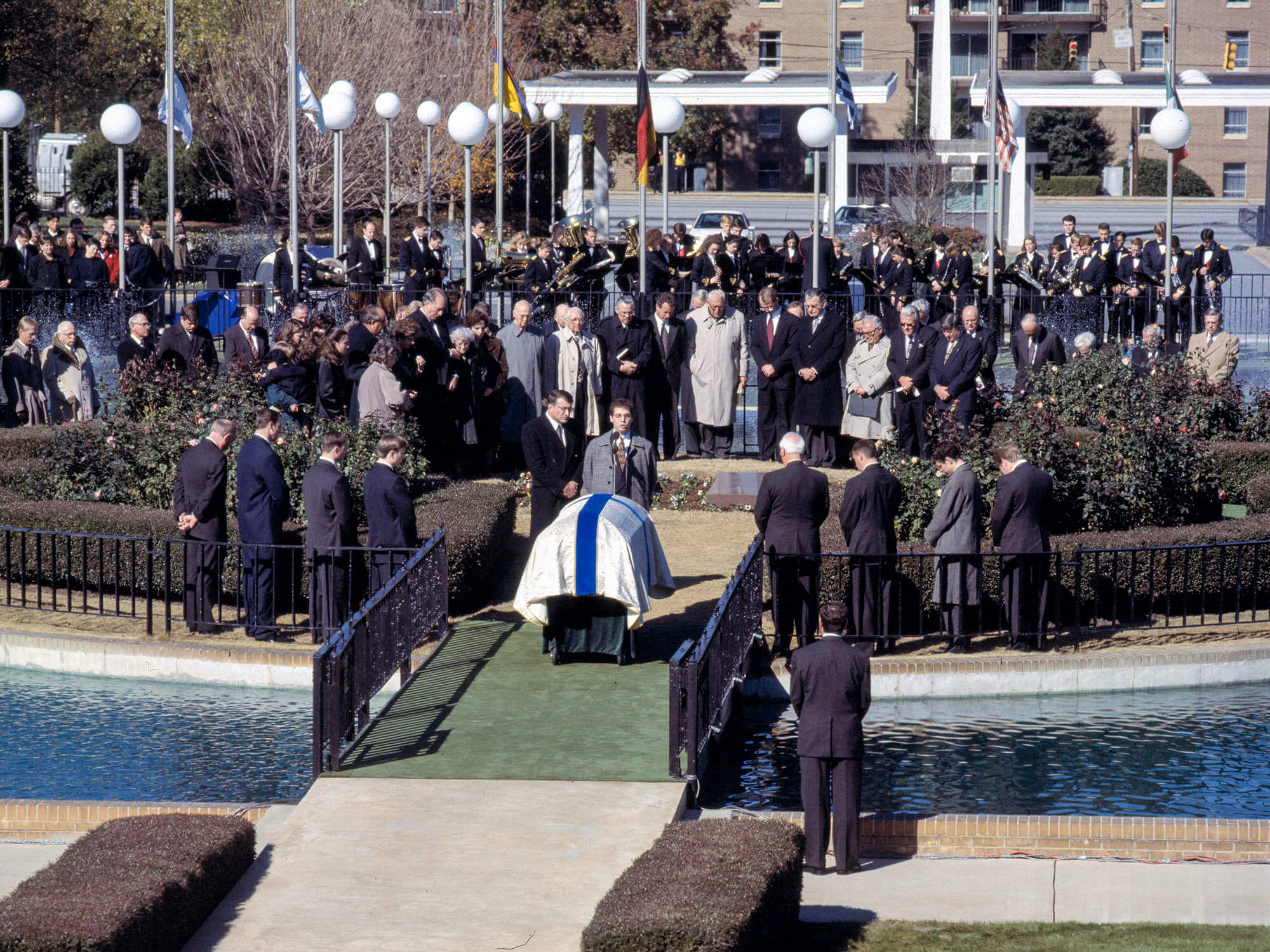
- Bob Jones Jr. died on November 12.
- The chimney at the co-generation plant was demolished.
- BJU Press published Daniel L. Turner’s Standing Without Apology: The History of Bob Jones University.

- The Sargent Art Building was completed.
- The first Living Gallery—a tableau vivant with associated music and drama—was presented just prior to Easter.

- The Gustafson Fine Arts Center was completed, and the Last Supper mosaic was mounted on its outside wall.
- “Heritage Day” replaced “Founders Day.”

- On February 2, presidential candidate George W. Bush made a campaign speech on campus, which sparked a national furor over BJU policies and culminated in Bob Jones III ending the interracial dating rule on March 3.
- The Bob Jones Jr. Memorial Seminary and Evangelism Center was dedicated.
- The dining common mall was redesigned with a clock tower included.
- The university farm, Pleasant Pastures, was sold.

The gymnasium was demolished, and its arches were repurposed as part of the Activity Center.
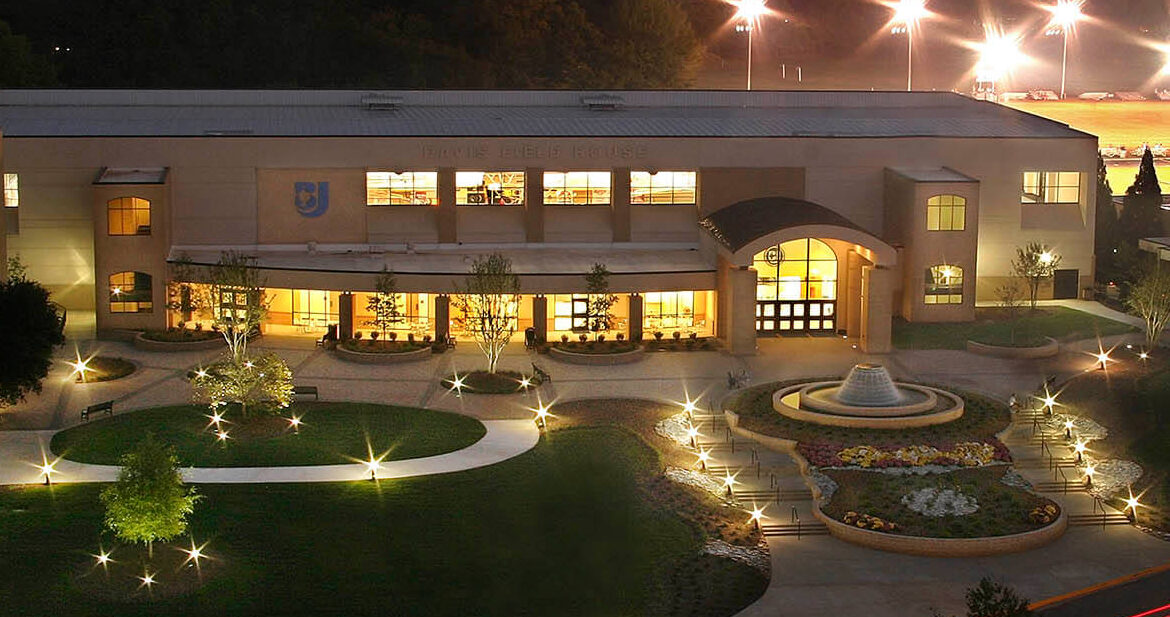
- The Davis Field House was completed.
- A Thanksgiving break was inaugurated.
- The 11:00 lights-out rule in the dormitories was discontinued.
- Unusual Films released Appalachian Trial, a children’s film.

Stephen Jones became the fourth president; Bob Jones III became chancellor.
BJU became fully accredited by the Transnational Association of Christian Colleges and Schools (TRACS).
- The construction of a new front entrance to campus began with the destruction of the entrance sign affectionately known as “The Giraffe.”
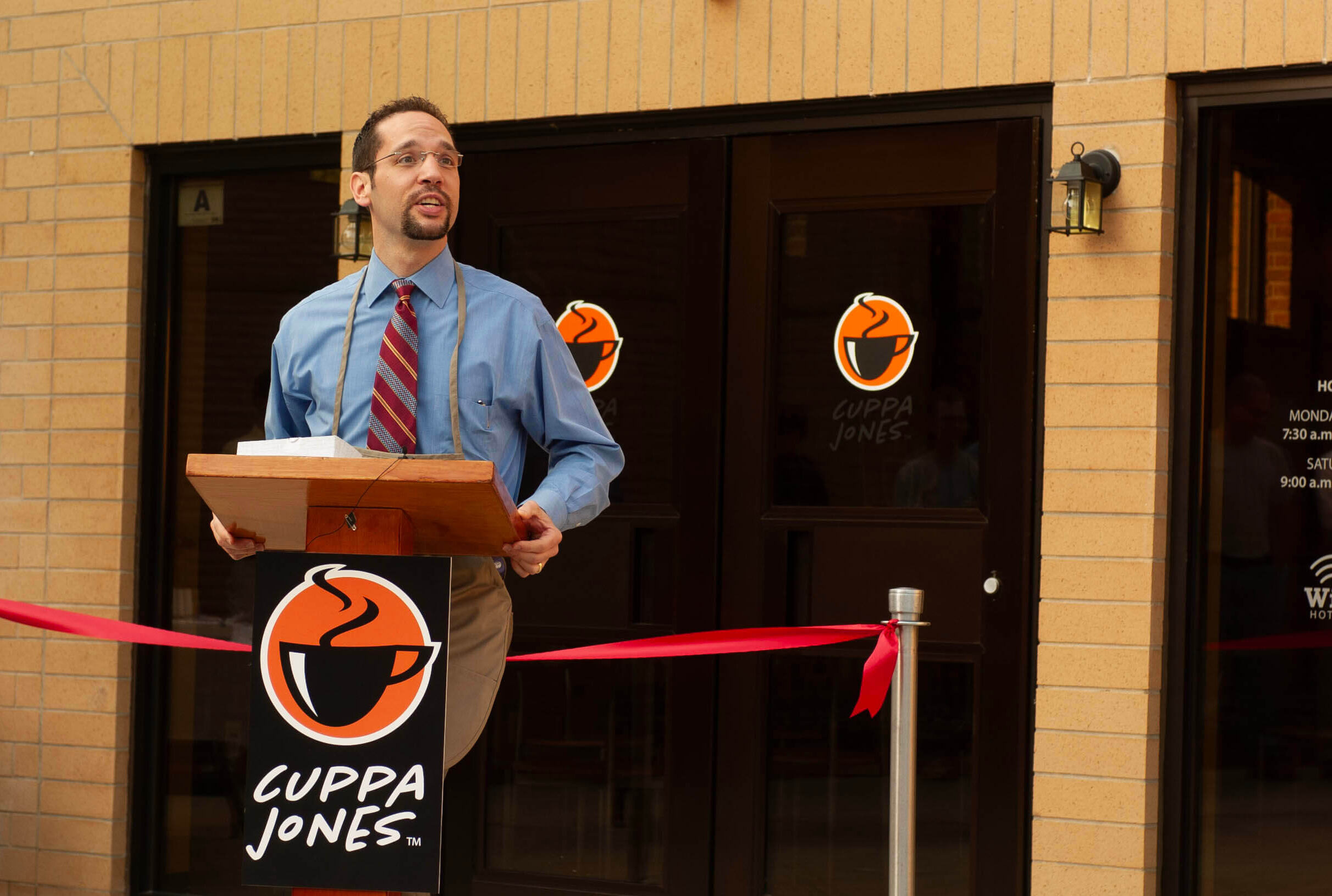
- The Cuppa Jones coffee shop was built between Alumni and Mack Buildings.
- The parking garage was completed.
Stephen Jones apologized for BJU’s past racial discrimination.

- The School of Applied Studies was closed.
- A new lobby was built at the entrance to Rodeheaver Auditorium.

- Unusual Films released Milltown Pride.
- The Bob Jones Elementary School, Junior High and Academy were joined under the name Bob Jones Academy.
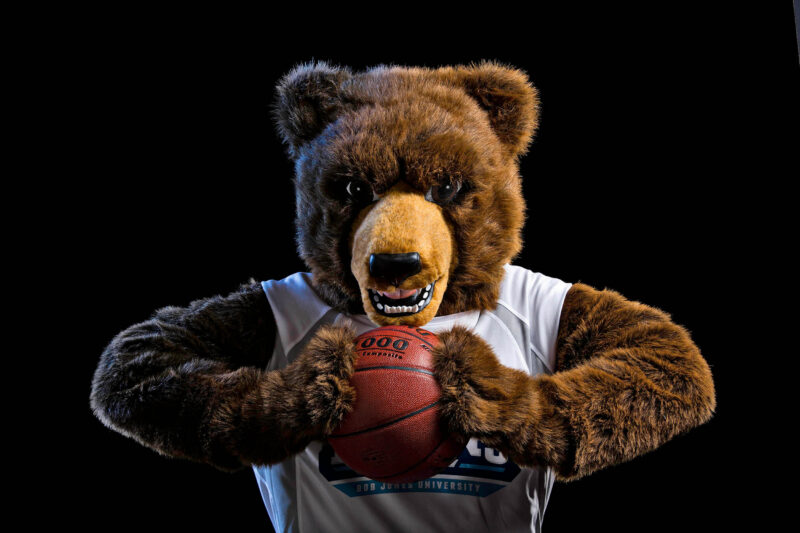
- Intercollegiate sports were reintroduced, and the Bruin became our mascot.
- Radio station WMUU was sold to Salem Communications.
- SoundForth, the music division of BJU Press, was sold to Lorenz Publishing Company.
- The operation of the dining common was outsourced to off-campus companies.
- BJU adopted a new tagline, “Build Faith. Challenge Potential. Follow Christ.”
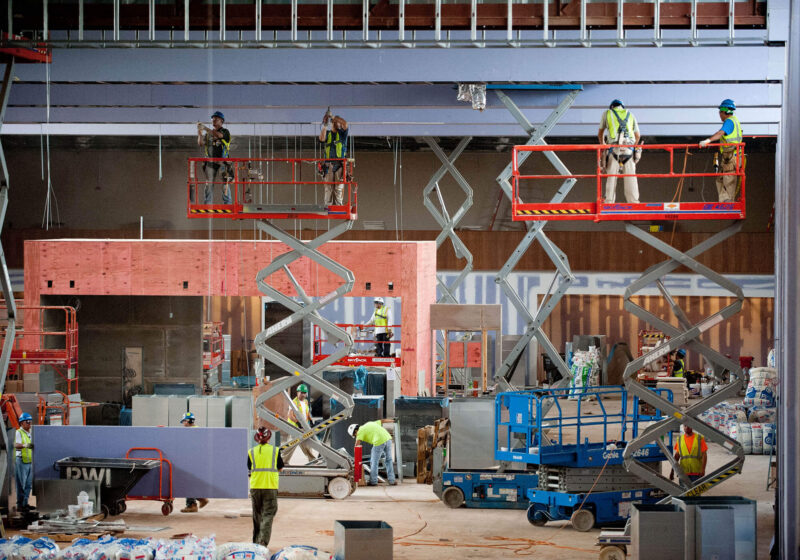
- The Varsity Room, renamed the Kalmbach Room, underwent a major renovation that introduced cafe-style seating around two food station islands.
- The engineering program was accredited by the Accreditation Board for Engineering and Technology (ABET).
- The required on-campus Sunday morning church service was ended.
- A bear rampant was introduced to the lower quadrant of the University crest, replacing the letters “BJU.”
- On September 19, Larry Jackson became the first person not a member of the Jones family to serve as Chairman of the Board of Trustees.
- Stephen Jones resigned as president, December 13.

- Steve Pettit was named president on May 10.
- Barge Hospital ceased operations on January 31.
- The Campus Store and Snack Shop were remodeled and renamed The Den.
- Vespers was ended.

- Administrative offices were moved into the former Dating Parlor of the Student Center.

- The Center for Global Opportunities was created to combine ministry outreaches.
- Unusual Films was closed.
- The Administration Building was demolished.
- Spring Break was inaugurated.
- BJU adopted a new tagline, “Learn. Love. Lead.”
- BJU inaugurated Study Abroad trips.
- BJU divided into non-profit and for-profit corporations.
- BJU officially regained its federal tax-exempt status on March 1.
- Regional accreditation was granted by the Southern Association of Colleges and Schools Commission on Colleges.
- The on-campus location of the Museum & Gallery closed.

- The School for Continuing, Online and Professional Education (SCOPE) was created to serve non-traditional learners.
- BJU entered partnership agreements with Furman University (Army) and Clemson University (Air Force) allowing qualified students to participate in ROTC programs.

- The School of Nursing was accredited by the Commission on Collegiate Nursing Education.
- Mack Library was consolidated on the second floor of the renamed Mack Building.
- The Den was remodeled to include a game room.
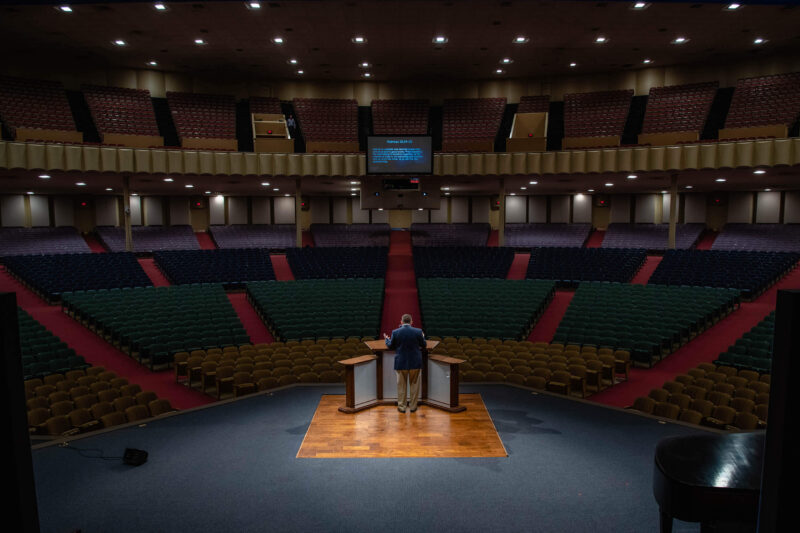
- On March 13, BJU ended in-person classes due to the Covid-19 pandemic, and a virtual graduation was held in May; nevertheless, bucking a national trend, the University successfully reopened for in-person classes in August.
- The School of Health Professions opened on the first floor of the Mack Building.
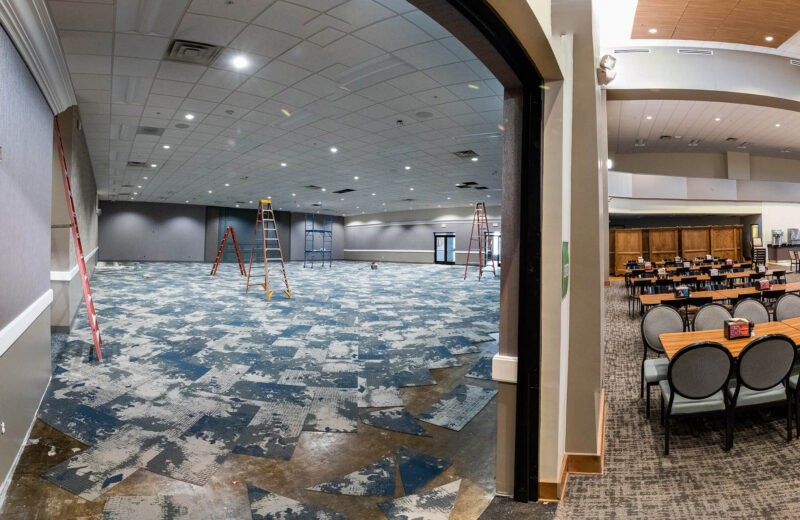
- A Fall Break was inaugurated.
- The Family Room of the Dining Common was remodeled and renamed the Davis Room. The Faculty Room (“Red Room”) was remodeled and renamed College Point.

- Steve Pettit resigned as president, effective at Commencement.
- The Board of Trustees named Alan Benson acting CEO.
- The Division of Nursing achieved accreditation from the Society for Simulation in Healthcare for its state-of-the-art nursing simulation spaces in the Mack Building.

- BJU Press installed a multi-million-dollar Landa S10P Digital Press.
- Joshua Crockett was named the sixth BJU president.

- Josh Crockett resigned as president.
- Bruce McAllister was chosen as the seventh president.
- David Fisher was appointed provost and executive vice president.
- BJU adopted a new tagline: “Pursue a Higher Calling.”

- Bob Jones University celebrates its centennial year.