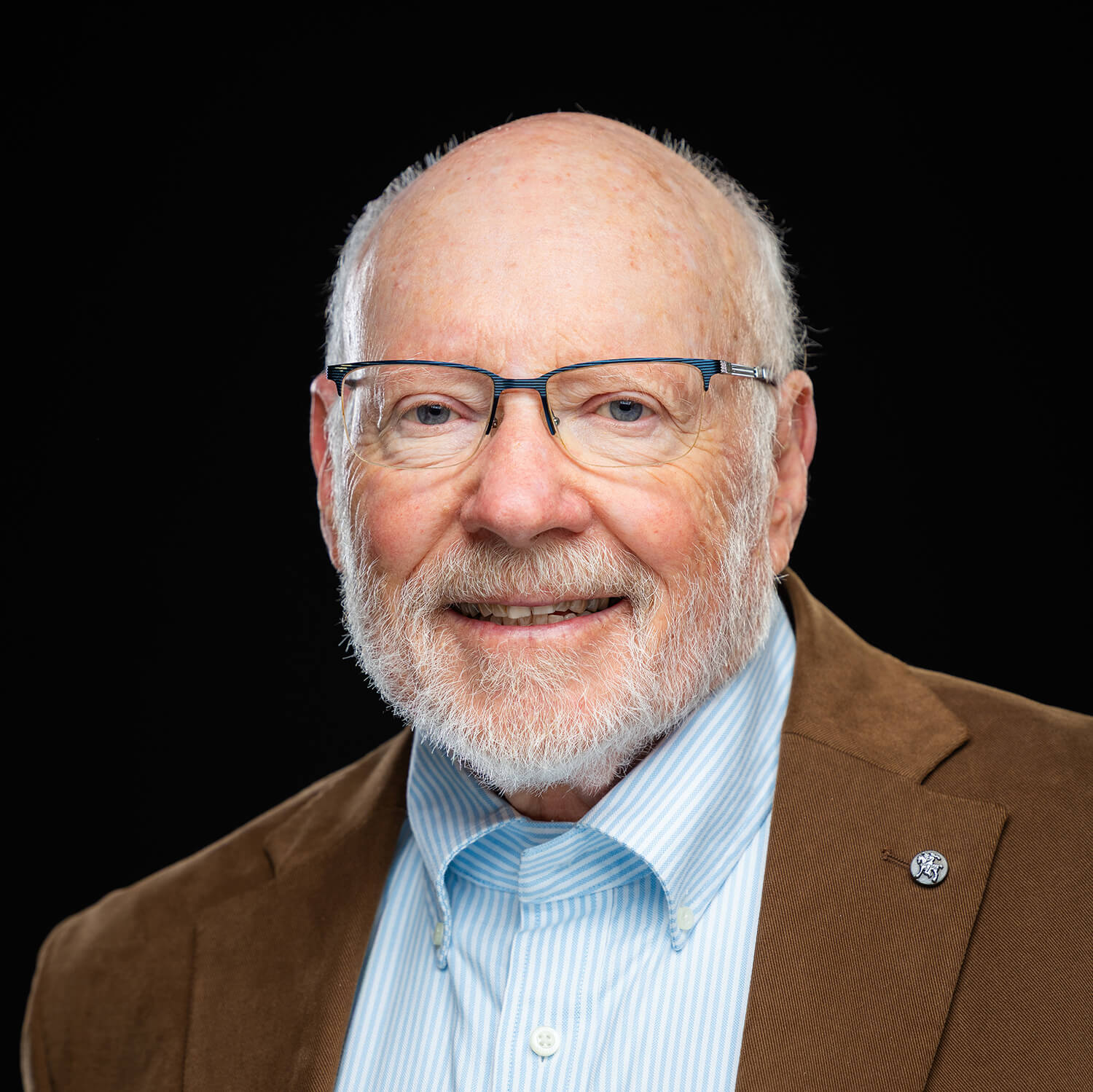
Born in 1943 on a family farm near Gloster, Mississippi, Harrell Whittington grew up surrounded by the beauty of God’s creation. The youngest of nine children, he spent his early years among cotton fields, livestock, and the towering forests of the Homochitto National Forest. Those experiences instilled in him two lifelong passions: a love for art and a deep appreciation for nature. To this day, he credits that early exposure to God’s creation as a guiding influence in both his life and his artistic vision.
A neighbor, Mary Lois Hayman, encouraged Harrell to attend Bob Jones University. It was here that he not only studied art but also dedicated his life to Christ through the preaching ministry of Dr. Bob Jones Sr. and Dr. Bob Jones Jr. Although he often joked that a Mississippi farm boy found Greenville’s concrete a poor substitute for soft ground and open fields, he persevered, earning his master of arts degree in 1968.
What followed was a remarkable lifetime of service to the University. As a student, Harrell joined the Art Agency and was soon recruited to help paint scenery for Love’s Labour’s Lost. What seemed like a simple assignment became the beginning of his life’s work.
For more than three decades, from the early 1960s through the late 1990s, Harrell played a central role in the visual life of BJU’s stage productions. Working alongside distinguished leaders such as Mel Stratton, Dwight Gustafson, Katherine Stenholm, and Dr. Bob Jones Jr., he painted scenery, designed sets and costumes, created lighting designs, and helped bring countless plays and operas to life. His expertise and creativity eventually became instrumental in the development of the University’s renowned Living Gallery productions.
His artistic influence can be found in cherished corners of this campus as well. Among his many contributions is the remarkable design of the Tudor-style ceiling and paneling in the Jerusalem Chamber, a faithful recreation of the historic room where the King James Bible translators met in 1611.
Yet while Harrell often describes the stage as his life’s work, generations of students remember him best as a teacher. Following graduation, he taught printmaking before joining the art faculty full-time, eventually teaching watercolor, oil painting, drawing, and other studio disciplines until his retirement in 2010. He challenged students to master a solid classical foundation while thoughtfully engaging contemporary developments in art. Above all, he sought to nurture the unique abilities of each student entrusted to his care.
As an artist, Harrell has exhibited widely throughout the Southeast, earned recognition from the South Carolina Watercolor Society, and placed works in both private and institutional collections. His artistic philosophy is simple yet profound: art should demonstrate a deep understanding of its subject and present that subject with authenticity, confidence, and grace.
But awards, exhibitions, and accomplishments tell only part of his story. Those who know Harrell remember his generosity, his creativity, his wit, his unmistakable perspective, and his genuine love for students. Through decades of faithful service, he helped create beauty, inspire excellence, and cultivate artists who continue to impact the world today.